You've seen it before. The sculpture in a hotel lobby that stops you mid-step. The light installation in a corporate atrium that makes everyone look up. The LED piece outside a new development that becomes the landmark people give directions by. That's public art. And someone had to make it happen. If you're reading this, that someone might be you.
We've been on both sides of this, as the artists creating the work and as the integrators making it technically bulletproof. This guide is everything I wish clients knew before they started. Whether you're a developer, architect, property manager, or city planner, here's your roadmap.
What Is a Public Art Commission?
A commission is pretty simple, someone hires you to make something specifically for their space. Not a painting off a gallery wall. Something designed from scratch, for that spot, that only works there. The key word is site-specific.
Commissions can range from a single sculpture to a multi-room experiential installation with integrated technology. The scale varies wildly, but the principle is the same: you're investing in something that will define the identity of a place.
Who Commissions Art?
More people than you'd think. The most common clients we work with:
- Real estate developers looking to differentiate luxury properties and mixed-use projects
- Architects who want art integrated into the building design from day one, not bolted on after
- Cities and municipalities with percent-for-art programs or public beautification budgets
- Corporations investing in headquarters, campuses, and branded environments
- Hotels and hospitality brands creating signature moments that guests remember and share
The common thread? They all get that a great space needs more than good architecture and nice furniture. It needs a soul. And art is how you give a space a soul.
Budget: What Does Public Art Cost?
Let's be real about numbers, because this is where most first-timers get tripped up.
For a smaller installation, a wall-mounted LED piece, a modest sculpture, a single-room light experience, you're looking at $50, 000 and up. That covers design, fabrication, materials, installation, and basic tech integration.
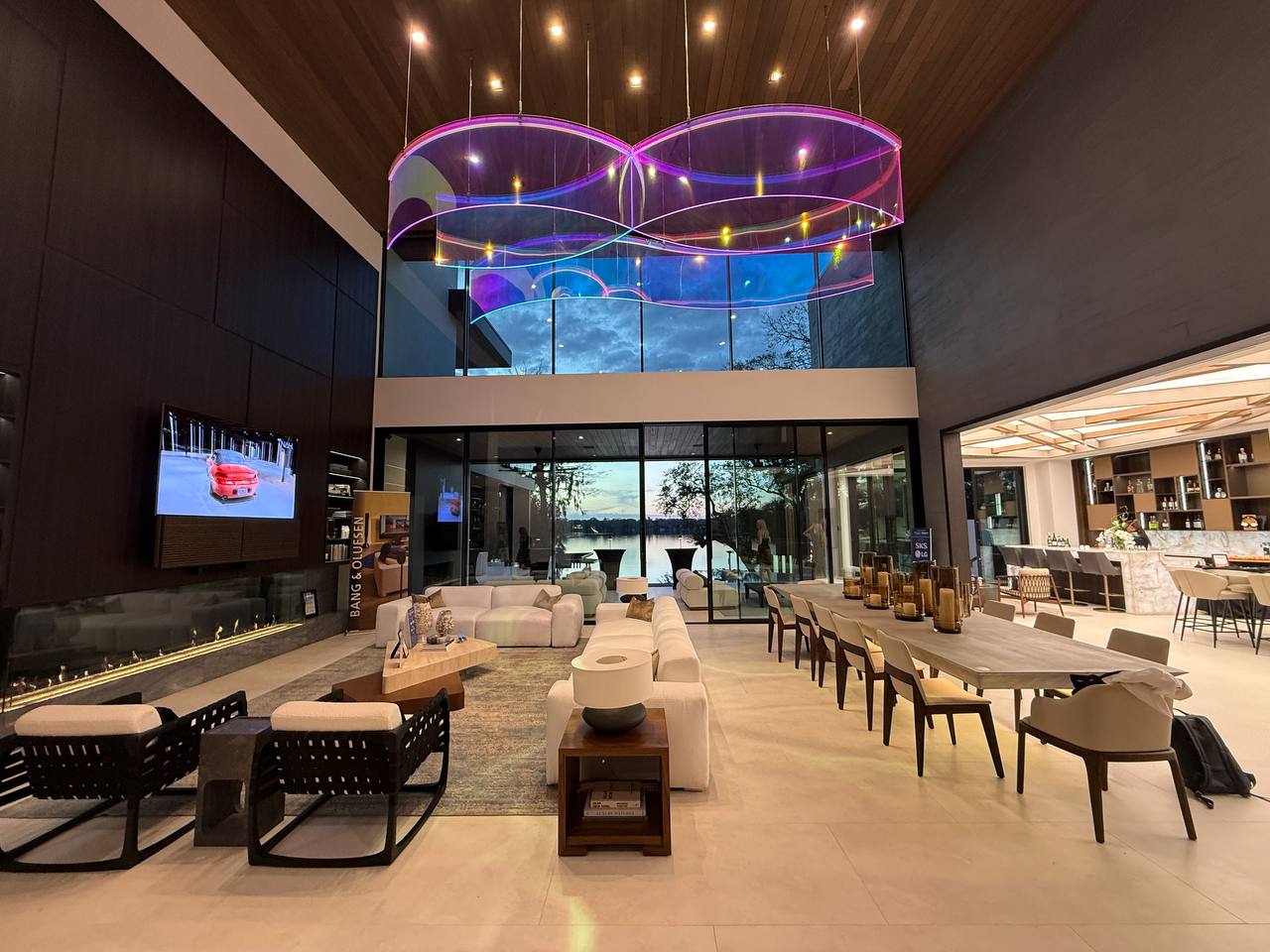
For mid-scale commissions, a lobby centerpiece, an outdoor sculpture, a multi-element installation, budgets usually land in the $200, 000-$500, 000 range. This is where you get into custom fabrication, sophisticated lighting, and work that genuinely transforms a space.
For landmark pieces, the kind that define a building or a public plaza, budgets run $500, 000 to $1 million and up. These are the projects that become destinations. The ones that show up in press and architecture publications. The ones people travel to see.
A good rule of thumb for commercial development: allocate 1-2% of total construction budget for art. A lot of cities with percent-for-art ordinances actually require it. Even without a mandate, it's smart, art increases property value, attracts tenants, and generates media attention that architecture alone rarely gets.
The Process: Concept to Installation
Every commission follows a general arc, though the details change with scale and complexity:
1. Concept & Discovery. This is where it starts. Understanding the space, your vision, who's going to experience it, and what the constraints are. We visit the site (or review plans if it's still being built), study the light, the materials, how people move through the space. We listen way more than we talk at this stage.
2. Proposal & Design. We develop a concept, sometimes two or three options, with renderings, material samples, and a clear picture of what it'll be and how it'll feel. This is where budgets get dialed in and everyone gets on the same page.
3. Design Development. Once a direction is locked, we go deep. Engineering drawings, structural calculations, material sourcing, tech specs. For pieces with LED, projection, or interactive elements, this phase includes programming and control system design.
4. Fabrication. Building the actual thing. Depending on the piece, that might mean metalworking, acrylic fabrication, LED integration, custom electronics, or all of it at once. This is where the art stops being a rendering and becomes real, and honestly, it's the most exciting phase every time.
5. Installation. Bringing the finished work to site, getting it in place, integrating with building systems, and commissioning everything technical. For complex pieces, this can take days to weeks.
Timeline Expectations
Commissions take longer than most people expect. Here's what's realistic:
- Small installations (single piece, simple materials): 3–4 months from concept to installed
- Mid-scale projects (custom fabrication, technology integration): 6–8 months
- Large-scale or landmark commissions: 9–12+ months, sometimes longer for complex engineering or permitting
The most important thing I can tell you: start the art conversation early. If you're building a new space and want integrated art, bring the artist in during schematic design, not after the drywall is up. The earlier we're involved, the better the art works with the architecture, and the fewer compromises everyone has to make.
Materials and Mediums
Public art has come a long way from bronze and marble (though those still have their place). Here's what we work with today:
- LED, direct-view panels, edge-lit elements, custom pixel configurations for dynamic, programmable visual experiences
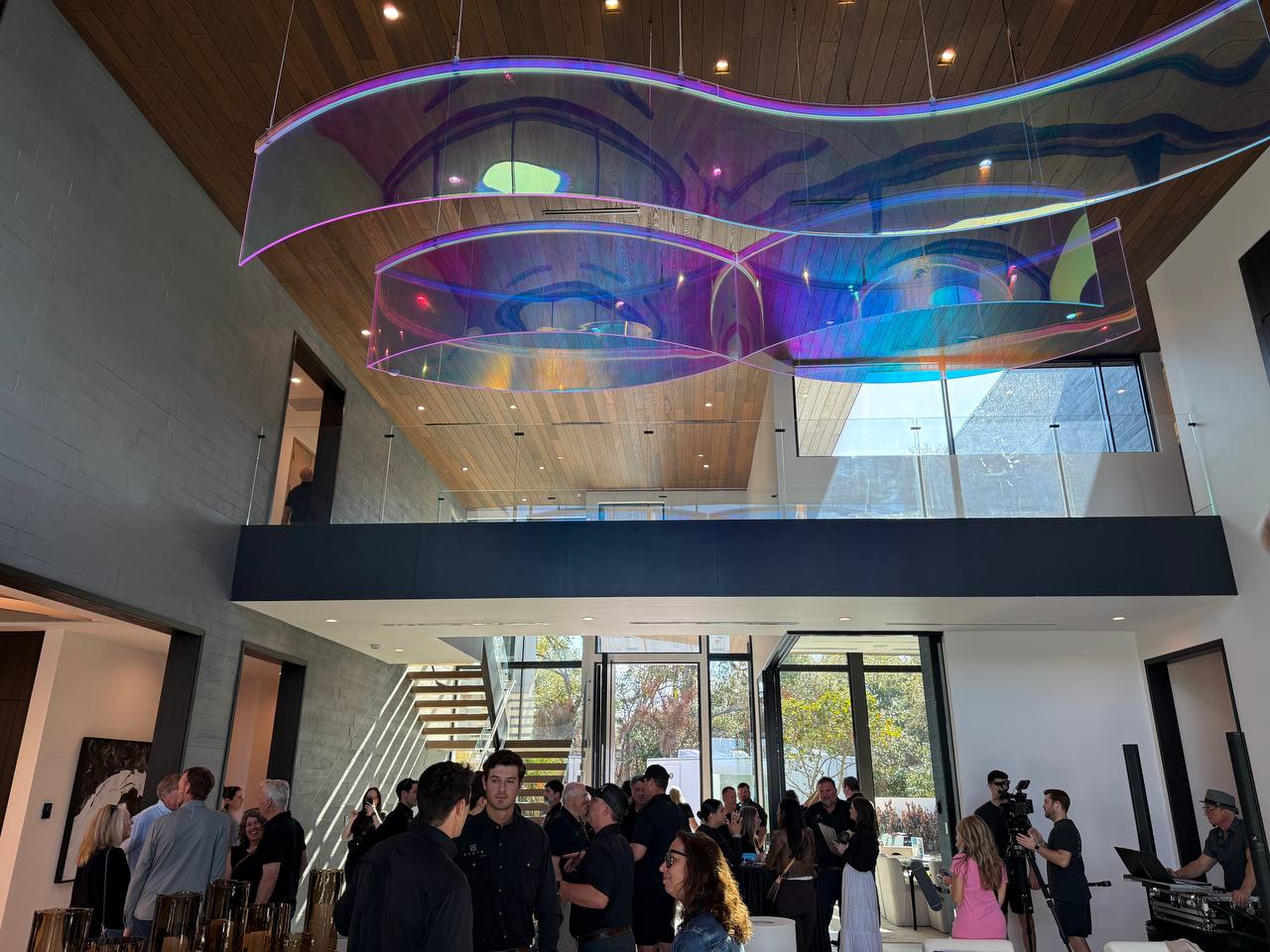
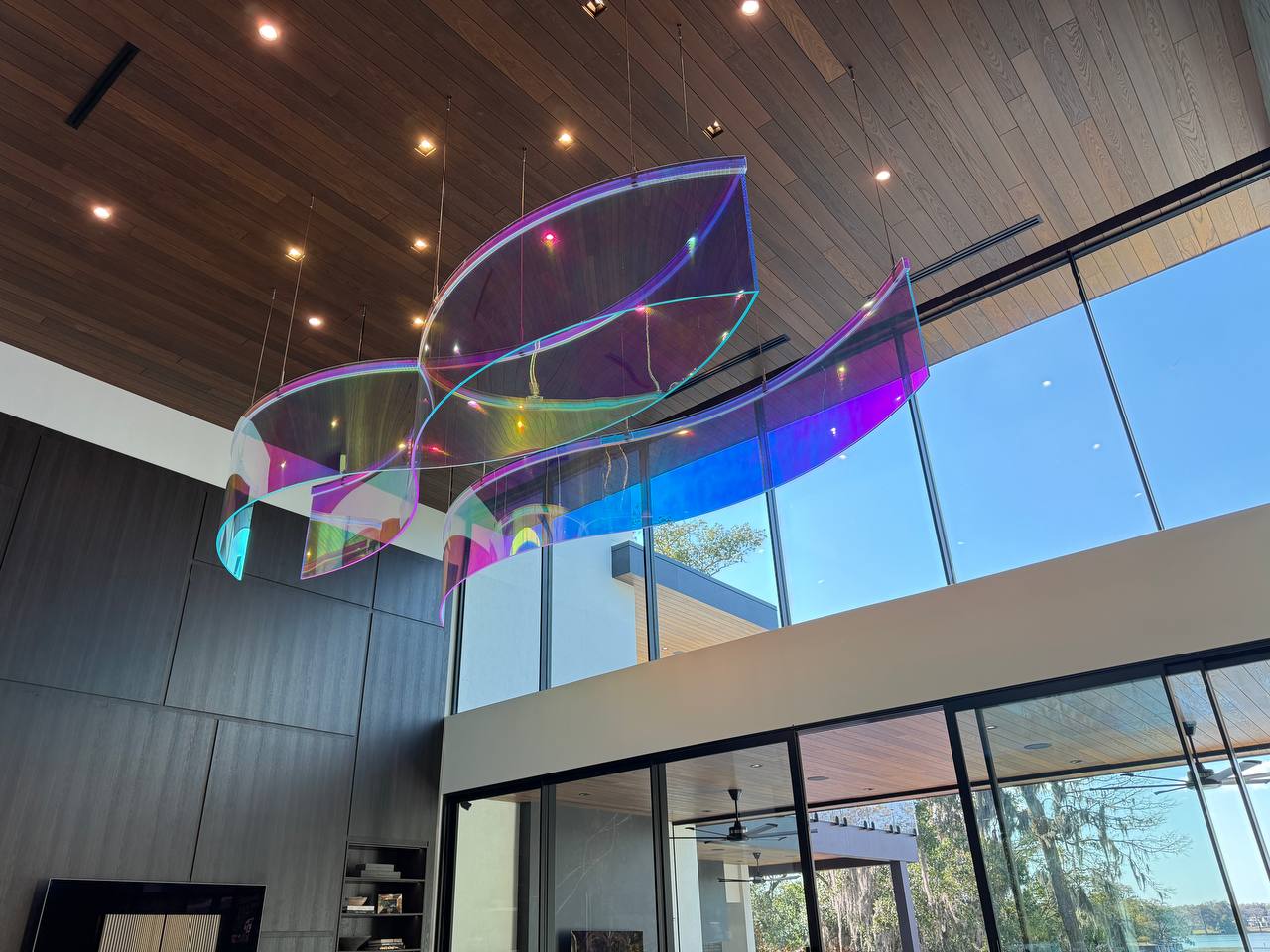
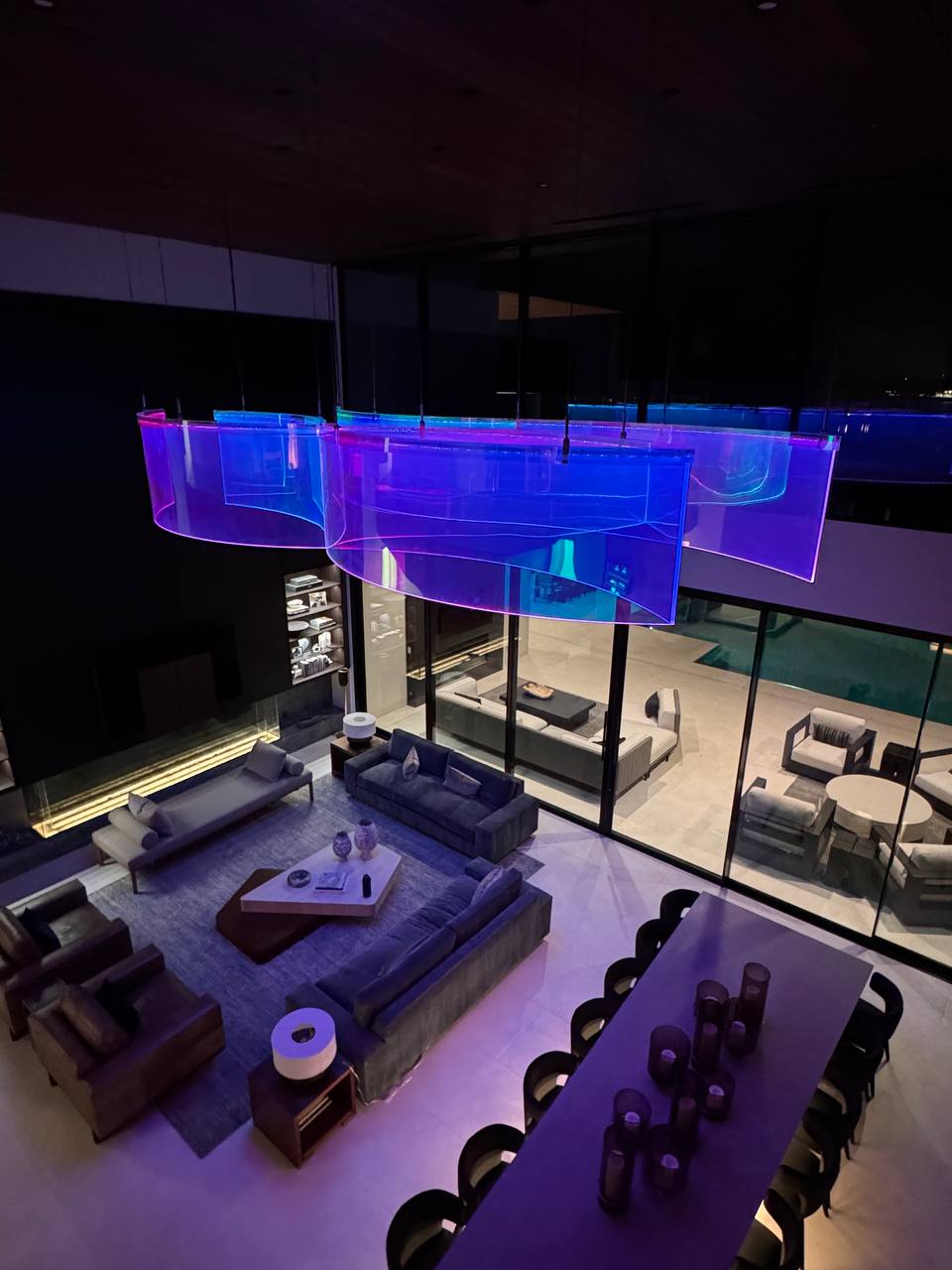
- Dichroic materials, acrylic and glass that split light into prismatic color, creating works that transform continuously with changing light
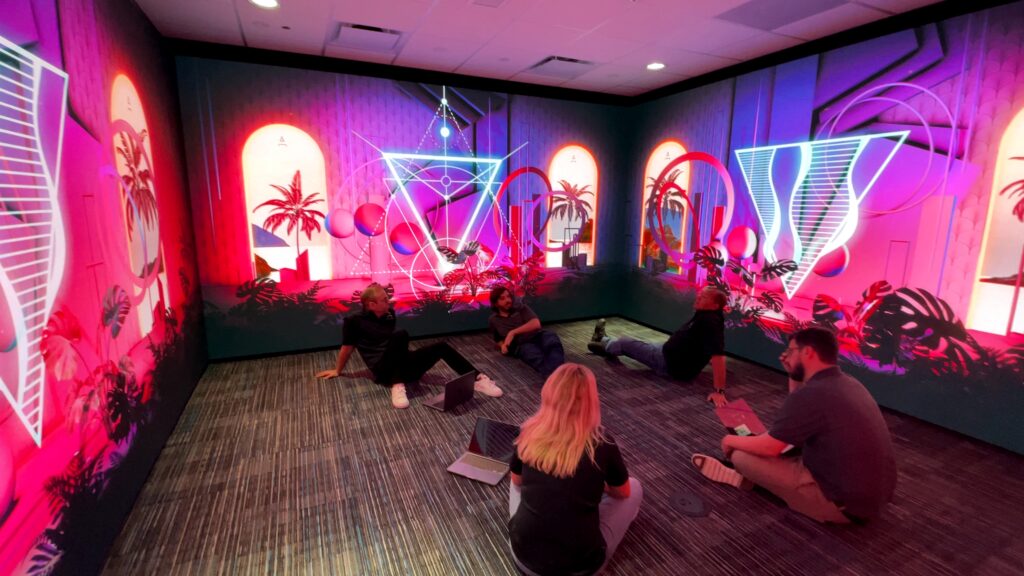
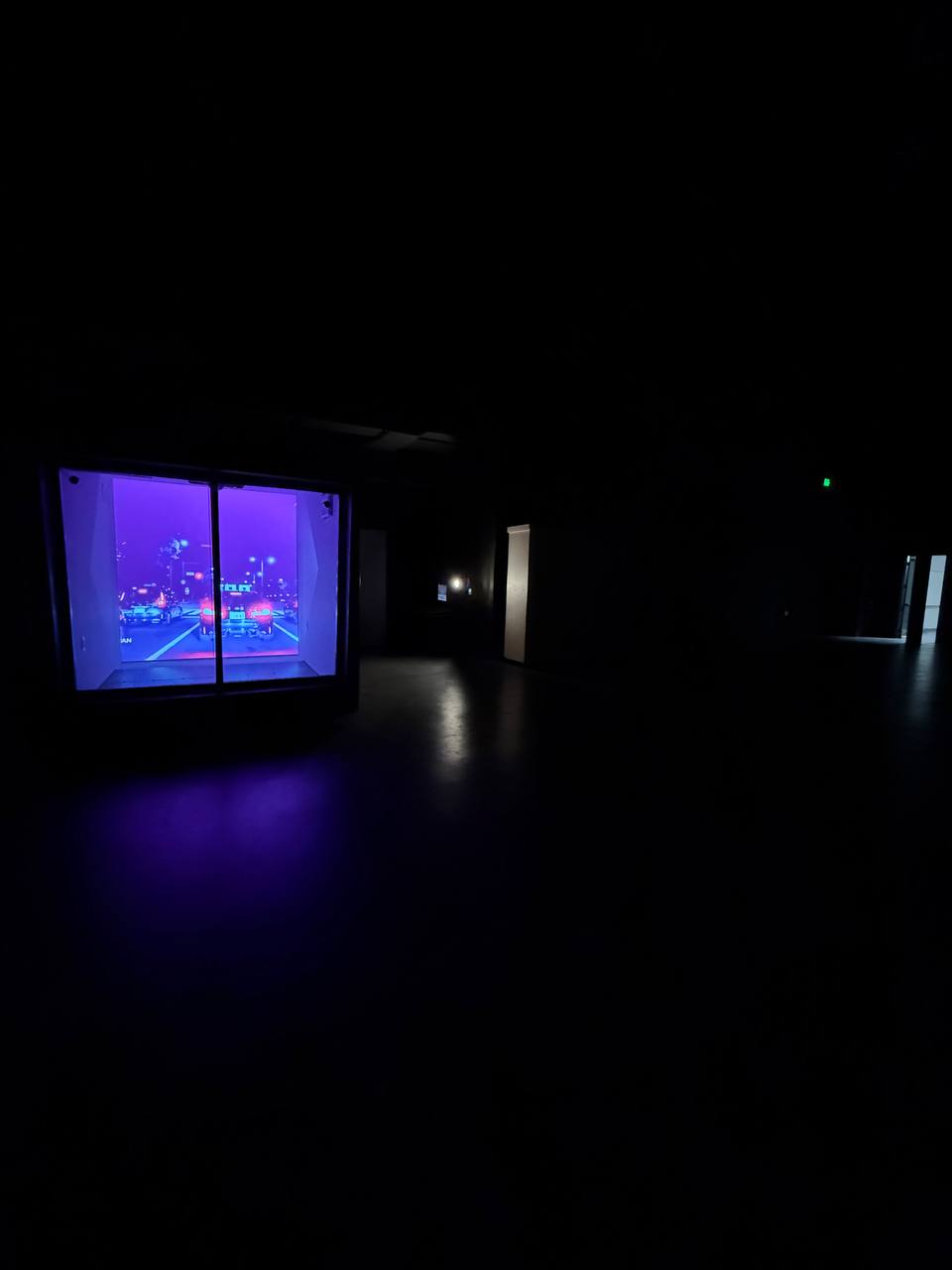
- Projection, mapped onto architectural surfaces, sculptures, or purpose-built screens for immersive visual environments
- Kinetic elements, motorized components that move, spin, or respond to environmental conditions like wind or sound
- Interactive technology, sensors, cameras, and responsive systems that let the audience influence or activate the artwork
The medium should always serve the concept, not the other way around. We've built pieces that use nothing but sunlight and geometry, and pieces that run on thousands of individually addressable LEDs. Both can hit just as hard.
Site-Specific Considerations
Every site has its own personality, and a good commission respects that. Here's what we look at:
Indoor vs. outdoor. Outdoor work has to handle weather, UV, temperature swings, and sometimes vandalism. That changes everything about materials, coatings, and enclosures. Indoor work has more freedom but different constraints, HVAC, fire code, ceiling structure, ambient lighting.
Scale. A piece that looks incredible in a rendering can feel tiny in a triple-height atrium if you don't get the scale right. We always design to the volume of the space, not just the wall it sits on.
Maintenance. Every installation needs a maintenance plan. LEDs eventually need replacing. Kinetic stuff needs servicing. Even static sculptures need cleaning. We design with maintenance access built in from day one, because a beautiful piece that's impossible to service is a future nightmare.
Writing an RFP for Public Art
If you're putting out a formal RFP, here's what helps artists give you their best work:
- Site photos, floor plans, and architectural drawings
- Clear budget range (even a broad one helps enormously)
- The intended audience and how they'll interact with the space
- Any technical constraints, power availability, structural loads, outdoor exposure
- Your timeline and key milestones
- What "success" looks like to you, the feeling, not just the specs
The best RFPs leave room for creative interpretation. Tell us what you want to feel, not exactly what you want to see. That's where the good stuff happens.
Working with the Artist
A commission is a collaboration, not a transaction. The best results happen when the client brings the vision and constraints, and the artist brings the creative problem-solving and craft. Expect regular check-ins, design reviews, and honest conversations about what's working and what isn't.
Trust the process. Trust the artist. You hired them for their vision, give them room to surprise you. Some of the most powerful moments in our commissions came from ideas that showed up during the process, not from the original brief.
Our Approach
"We don't just install art. We create experiences that give spaces their identity."
Here's what makes us a little different: we're both the artists and the technologists. We design the concept, fabricate the work, engineer the technology, and handle the integration. One team, one vision, no game of telephone between what the artist wants and what actually gets built.
We've built dichroic light sculptures that turn homes into living prisms. We've created immersive LED environments that make entire rooms disappear into content. Every project starts with the same question: how should this space make people feel?
If you're thinking about a commission, hotel lobby, corporate campus, public plaza, private residence, I'd love to hear about it. The best projects always start with a conversation.