I get this question at least once a week. A hotel GM wants a wow-factor lobby display. A corporate client needs a presentation wall for their boardroom. An architect is designing a branded experience center and wants something immersive. Somewhere in the conversation, the same fork in the road shows up: "Should we go LED or projection?"
The honest answer is that it depends. But not in the vague, consultant-speak way where "it depends" means "I don't want to commit." It genuinely depends on your space, your content, your budget, and what you're trying to make people feel when they walk in.
I've designed and installed both, hundreds of times, across hotels, corporate campuses, themed attractions, and immersive art environments. Here's what I've learned.
LED Video Walls: The Bright, Bold Option
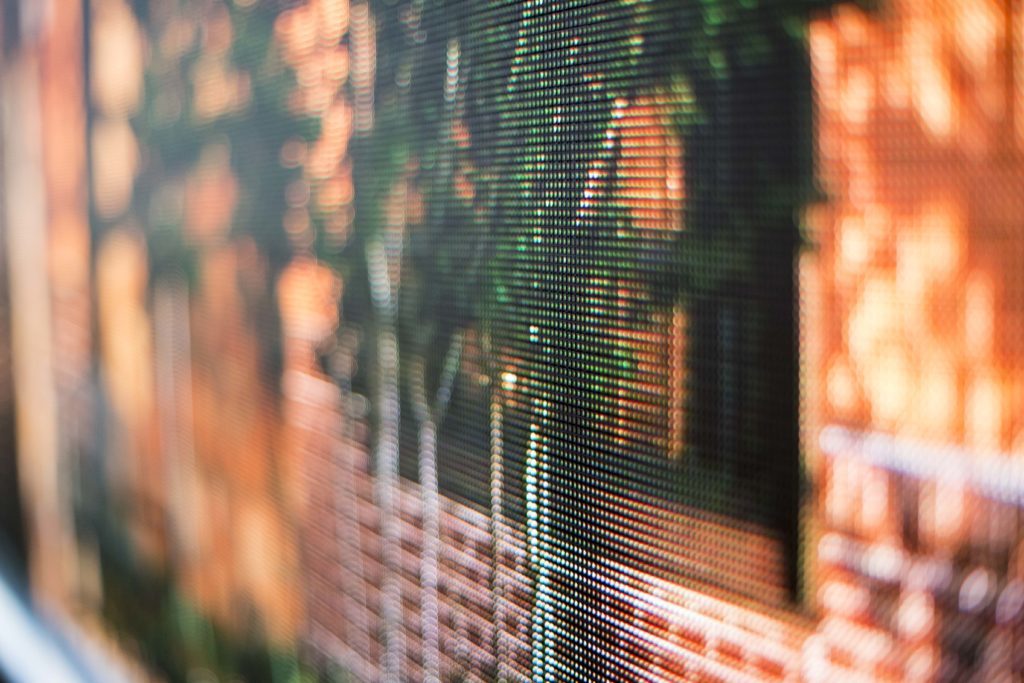
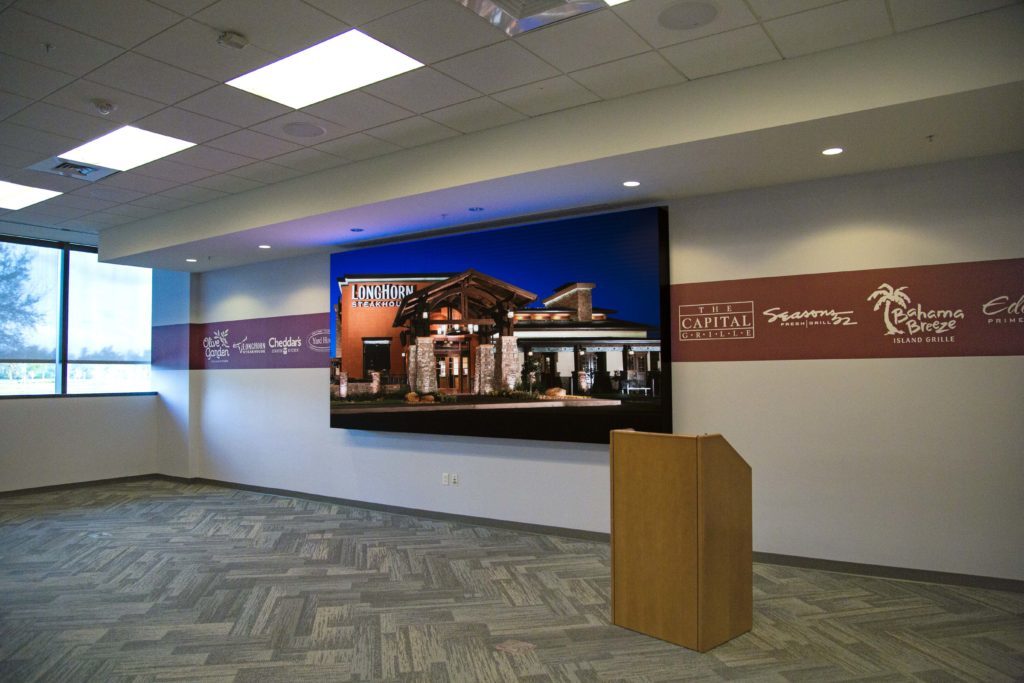
Direct-view LED is what most people picture when they think "video wall." Individual LED modules tiled together into a seamless display surface. No projector, no screen, no lamp to burn out. The pixels are the wall.
The technology has come a long way in the last decade. Pixel pitches have gotten tighter (meaning higher resolution at closer viewing distances), costs have come down significantly, and the form factors have gotten more flexible. We've installed LED walls that curve around corners, wrap columns, and even create full-room immersive caves.
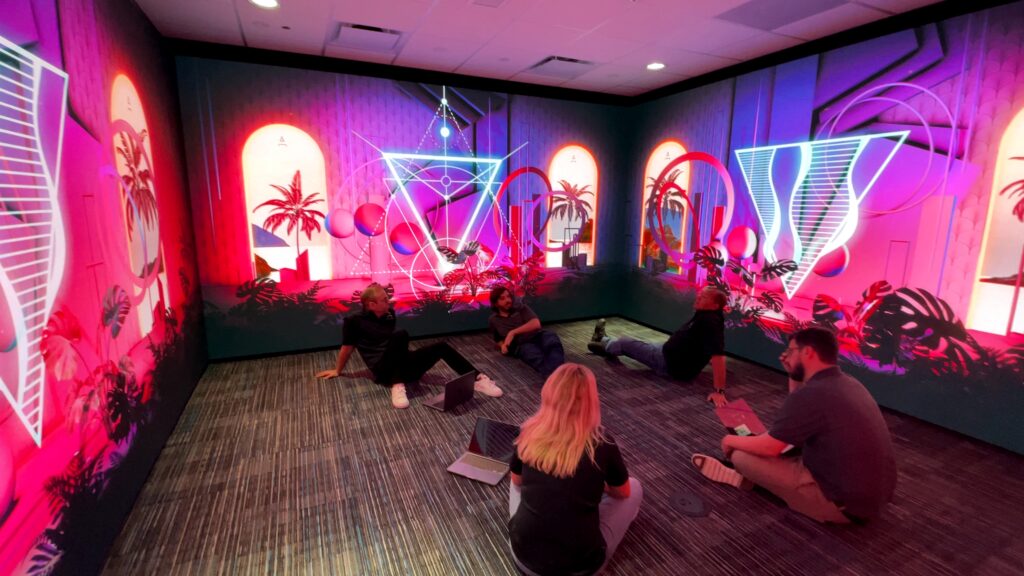
Where LED wins:
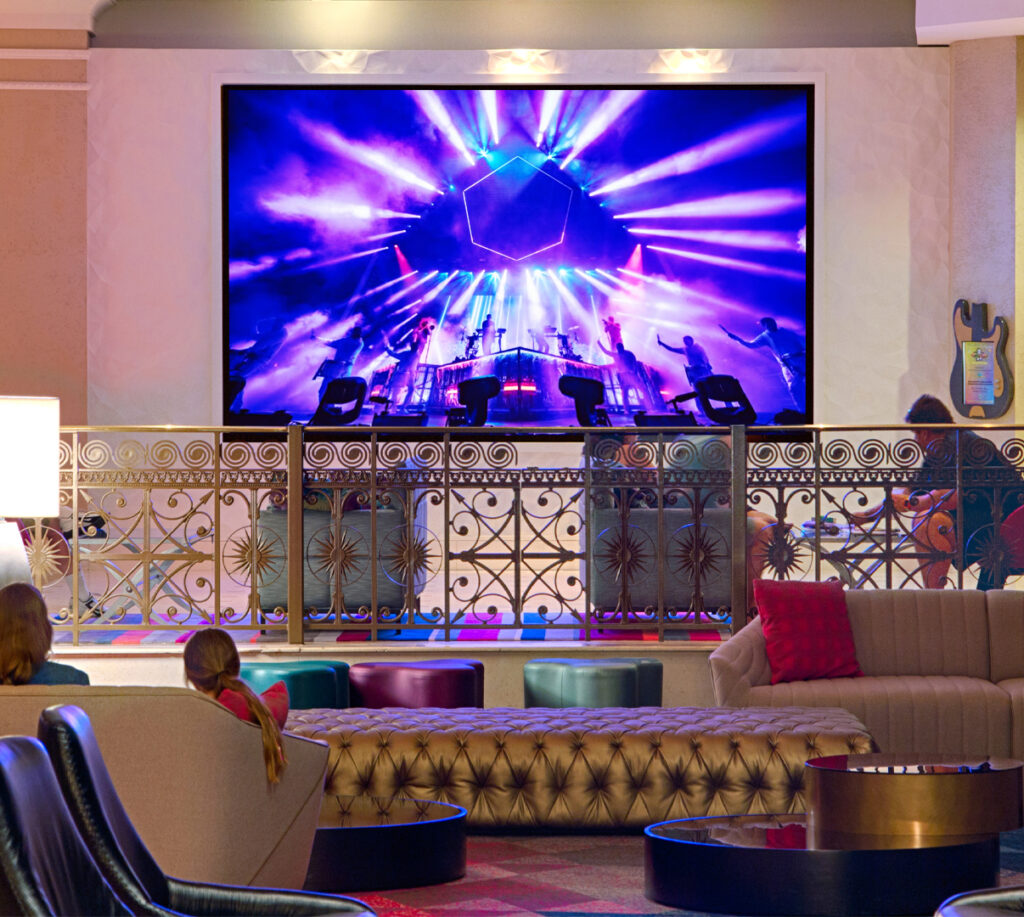
- Brightness. LED walls are self-emissive, they make their own light. That means they look stunning even in bright ambient environments. Hotel lobbies with floor-to-ceiling windows? No problem. Outdoor-facing retail? LED doesn't flinch.
- Longevity. A quality LED wall will run 80,000-100,000 hours before reaching half brightness. That's over a decade of 24/7 operation. No lamps to replace, no filters to clean.
- Seamless at scale. A 20-foot-wide LED wall has no visible seams, bezels, or alignment issues. It's one continuous canvas. Try that with tiled projectors and you'll spend half your budget on edge-blending.
- Low maintenance. Individual modules can be hot-swapped if a pixel cluster fails. No downtime, no re-calibration of the whole system. You pop out a tile, pop in a new one, done.
- Content flexibility. Feed it anything, live video, data dashboards, branded content, generative art. It doesn't care. It just displays.
Where LED has limitations:
- Cost per square foot. LED is more expensive upfront than projection for large surfaces. A fine-pitch LED wall for a conference room can run $1,500-$3,000+ per square foot depending on pixel pitch. That adds up fast.
- Weight and structure. LED walls are heavy. A typical indoor wall might weigh 50-80 lbs per square foot once you include mounting structure. Your wall needs to handle that, or you're building additional steel.
- Pixel pitch matters. Get too close to a wide-pitch wall and you'll see individual pixels. For viewing distances under 6 feet, you need fine pitch (1.5mm or tighter), which drives cost up considerably.
Projection: The Immersive Storyteller
Projection sometimes gets treated like the older, less cool sibling. That's a mistake. In the right application, projection does things LED physically can't.
Modern laser projectors are a different beast from the lamp-based units most people remember. We're talking 20,000-40,000+ lumens, 20,000-hour laser lifespans, and image quality that rivals direct-view displays at appropriate viewing distances. And the creative possibilities are genuinely different.
Where projection wins:
- Coverage per dollar. Need to fill a 40-foot wall? Projection gets you there at a fraction of the LED cost. One or two high-output projectors can cover surfaces that would require hundreds of LED modules.
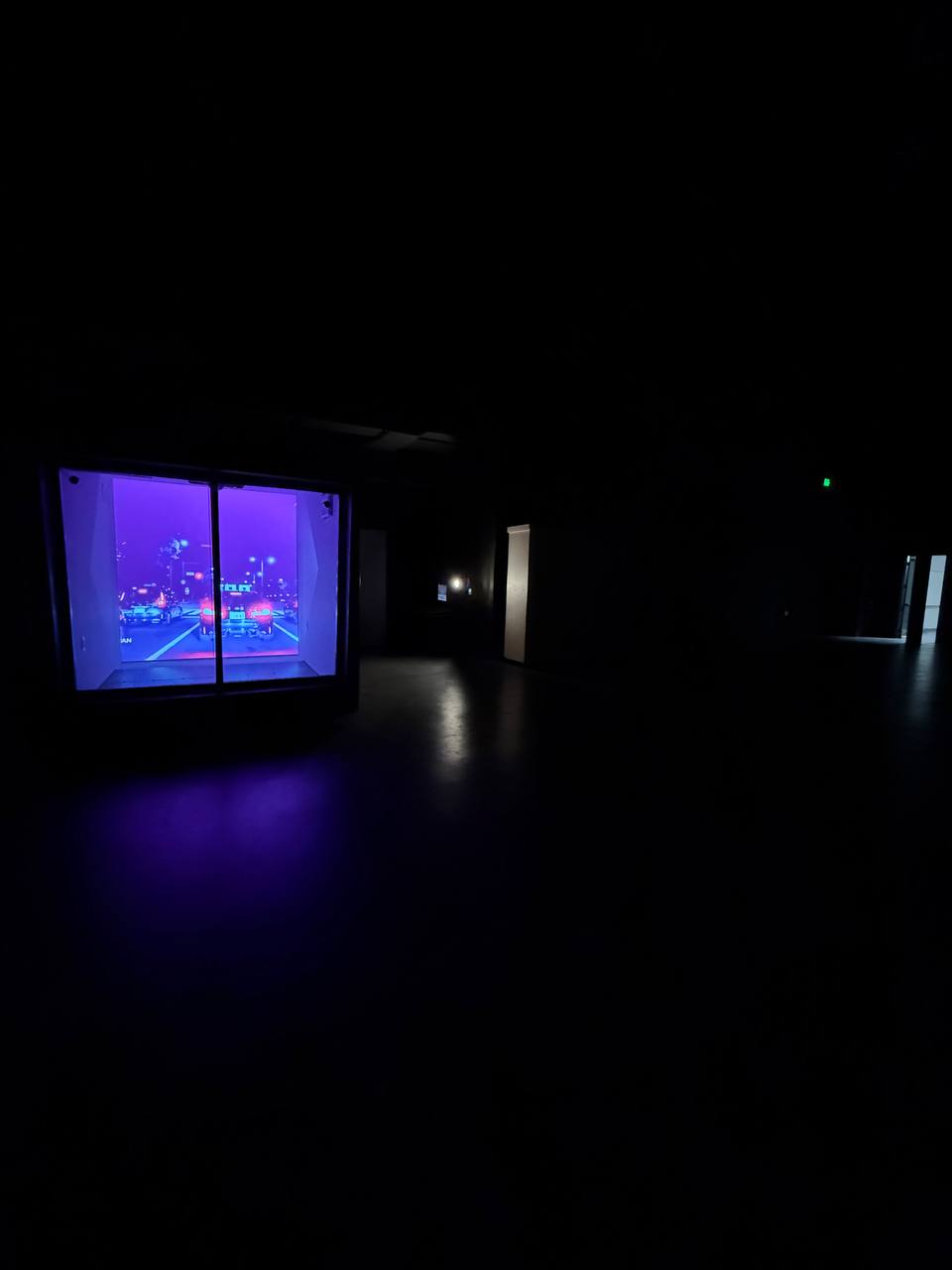
- Projection mapping. This is the killer feature. Projection can conform to irregular surfaces, architectural details, sculptures, curved walls, even entire building facades. You can't wrap an LED panel around a column the way you can map a projector onto one.
- Hidden hardware. The projector sits behind or above the audience. The display surface can be a wall, a screen, a scrim, or even mist. There's no visible technology, just image appearing on a surface. For artistic and experiential applications, that invisibility is powerful.
- Flexibility. Reposition a projector and you've changed your entire display. Swap content and the room transforms. For spaces that need to serve multiple purposes, projection adapts faster than any fixed display.
- Weight. A projection surface weighs almost nothing compared to an LED wall. That opens up applications on surfaces that can't support heavy displays.
Where projection has limitations:
- Ambient light is the enemy. Projection relies on reflected light. In a bright lobby with sunlight streaming in, even a 30,000-lumen projector can look washed out. LED doesn't have this problem.
- Throw distance. Projectors need space. A standard throw projector might need 15-20 feet of clear space to fill a large surface. Short-throw and ultra-short-throw options exist but add cost and have their own quirks.
- Maintenance. Filters need cleaning. Lenses need alignment. Laser projectors have reduced this considerably compared to lamp-based models, but it's still more upkeep than LED.
- Shadows. If people walk between the projector and the surface, you get shadows. Rear-projection eliminates this but requires space behind the screen.
So Which One Do You Choose?
Here's my honest decision framework after years of designing these systems:
Go LED when:
- The space has high ambient light (lobbies, retail, outdoor-adjacent areas)
- You need 24/7 reliability with minimal maintenance
- Close viewing distance is expected (under 10 feet)
- The display surface is flat or gently curved
- You want a permanent, flagship visual statement
- Budget allows for the upfront investment (the TCO over 10 years is actually very competitive)
Go projection when:
- You need to cover massive or irregular surfaces
- The environment allows for controlled lighting
- The goal is immersive, experiential, or theatrical
- The space needs to transform for different events or uses
- Budget needs to stretch across a large visual canvas
- You want the technology to disappear and the content to feel magical
Use both when:
This is actually my favorite answer. Some of the most impactful spaces we've built use LED for the hero moment, the lobby wall, the main stage backdrop, and projection for the immersive environment around it. They complement each other beautifully when designed as a system rather than competing technologies.
"The best display technology is the one your audience never thinks about. They just feel the content."
The Real Question Behind the Question
Here's what I've figured out over the years. When someone asks "LED or projection?" what they're really asking is "how do I make this space feel the way I want it to feel?" The technology is just the tool. The real design challenge is understanding what that space needs to communicate, how people move through it, and what emotional response you're designing for.
That's where the conversation should start. Not with pixel pitch and lumen specs, but with the feeling. Once we know what the space needs to do, the technology choice usually becomes obvious.
What About Cost?
I'll give you real numbers because I know that's what people actually want.
A fine-pitch LED wall (1.2-1.5mm pixel pitch, suitable for close viewing in a conference room or lobby) runs roughly $1,500-$3,000 per square foot installed, depending on manufacturer and pixel pitch. A 10' × 6' wall lands somewhere in the $90,000-$180,000 range.
A high-output laser projector capable of filling that same 10' × 6' surface costs $15,000-$40,000 for the projector itself, plus $2,000-$5,000 for a quality screen or surface treatment. Total: $20,000-$50,000.
That's a massive difference in upfront cost. But factor in LED's lower maintenance, longer life, and superior performance in ambient light, and the 10-year total cost of ownership gap narrows significantly. For spaces that run content 12+ hours a day, LED often wins on TCO despite the higher buy-in.
Our Approach
We're technology-agnostic. We don't have a warehouse full of one brand we're trying to move. We spec what's right for your space, your budget, and your goals. Sometimes that's a stunning direct-view LED wall. Sometimes that's a pair of laser projectors doing something magical. Sometimes it's both.
What we won't do is sell you a $200,000 LED wall when a $40,000 projection setup would actually serve the space better. Or vice versa. This stuff is too expensive and too visible to get wrong.
If you're at the LED-or-projection crossroads right now, let's talk through it. Bring your floor plans, your photos, your Pinterest board, whatever you've got. We'll help you figure out what your space actually needs.