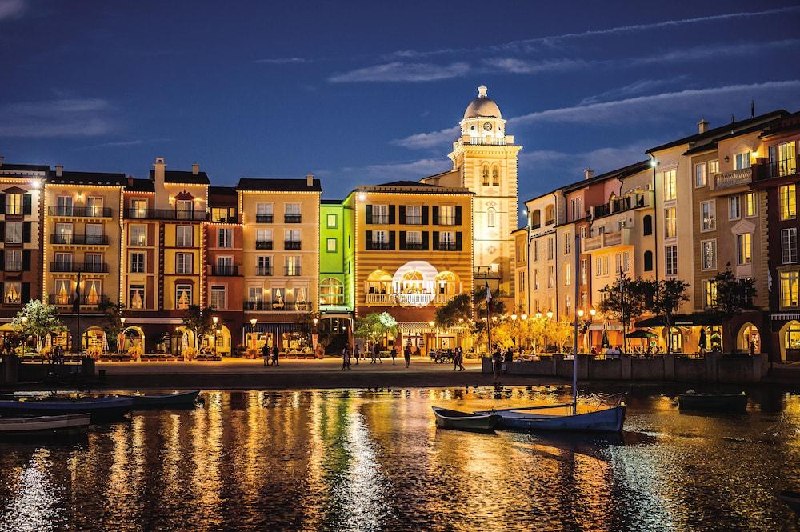
Loews Portofino Bay Hotel at Universal Orlando is one of the most beautiful resort properties in Central Florida. The architecture transports you to the Italian Riviera — pastel facades, a harbor piazza, cobblestone pathways winding between restaurants and pools. It's the kind of place where the setting itself is the experience.
And for years, the audio system wasn't keeping up with it.
When we got the call, the property was dealing with what a lot of large resorts deal with: a patchwork of audio systems installed at different times by different teams, with different equipment, running on different platforms. Some zones sounded great. Some sounded thin and strained. Some had dead spots where the music just... stopped. Transitions between areas were jarring. The pool deck was competing with the restaurant next to it. And controlling any of it required a level of technical knowledge that the front-of-house staff shouldn't need to have.
They needed a complete rethink. Not a patch job. A system designed as one cohesive whole.
Understanding the Space
Before we touched a single speaker, we spent days walking the property. Every hallway. Every restaurant. Every pool deck, garden path, ballroom, and back-of-house corridor. We mapped out every existing speaker location, documented what was working and what wasn't, and — most importantly — we listened.
Not to the equipment. To the space. How sound moved through the harbor piazza at different times of day. Where conversations happened. Where the ambient noise from fountains and foot traffic created natural masking. Where quiet was the point. The architecture at Portofino isn't just visual — it shapes how sound behaves in ways that matter enormously for audio design.
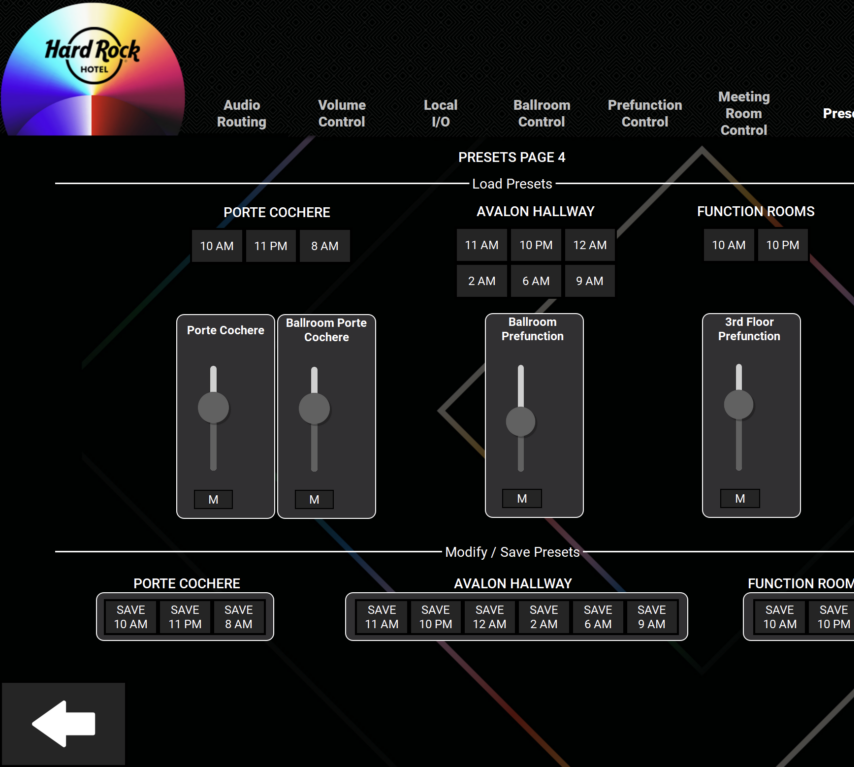
We identified 33 distinct audio zones across the property. Each one had its own personality, its own acoustic challenges, and its own requirements. A fine-dining restaurant needs a fundamentally different audio approach than a pool deck. A grand ballroom that hosts weddings on Saturday and corporate conferences on Monday needs flexibility that a fixed system can't provide. A garden pathway needs gentle background music that doesn't bleed into the guest rooms above it.
Thirty-three zones. Thirty-three sets of problems. One system to solve all of them.
The Design Philosophy
Here's the thing about resort audio that most people don't think about: when it's done right, you don't notice it at all. You just feel like the space is alive. The music fits. The volume feels natural. You walk from the lobby to the pool and the vibe shifts seamlessly, like turning a page in a book rather than channel-surfing.
When it's done wrong, you absolutely notice it. Music too loud in the restaurant. Dead silence in a hallway that suddenly feels cold. Two zones bleeding into each other so you get competing songs at the border. An announcement that blasts through the pool speakers at concert volume because someone couldn't figure out the controls.
Our design philosophy was simple: every zone gets exactly what it needs, and the whole property feels like one continuous, intentional experience.
Zone by Zone: What Makes 33 Zones Work
The technical breakdown of a multi-zone audio system this size could fill a textbook, but here's the thinking that makes it actually work for a resort operation:
Speaker selection per environment. We didn't use one speaker model across the whole property. Outdoor zones got weather-rated speakers designed for wide dispersion across open areas. Restaurants got architectural speakers that blend into ceilings and deliver warm, even coverage without hot spots. Pool decks got speakers that can push clean audio over the noise of splashing and conversation without distorting. Each zone got speakers matched to its acoustic environment, not just bolted in because they were on the truck.
Zone isolation. This is where the magic happens. Adjacent zones need to be able to play completely different content at completely different volumes without bleeding into each other. That means careful speaker placement, precise aiming, and sometimes creative use of architectural features as natural sound barriers. The harbor piazza, for example, has multiple dining areas around it that each need their own audio identity — but they're in an open-air space with hard reflective surfaces everywhere. Getting that right took serious attention to coverage angles and volume tapering at zone boundaries.
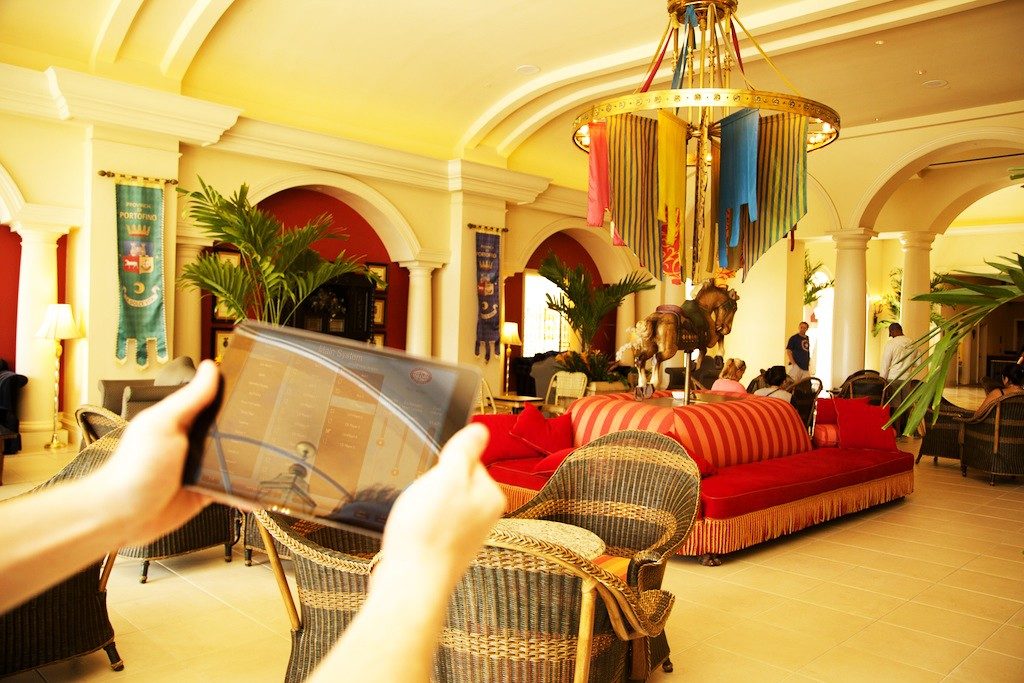
Centralized control with local flexibility. The entire system runs on a networked audio platform that lets the engineering team manage all 33 zones from a single interface. But we also built in local overrides — a restaurant manager can adjust their space's volume from an iPad without calling engineering. A banquet team can switch their ballroom to a different source for an event. The system is smart enough to have hierarchy: local adjustments work within guardrails that the engineering team sets, so nobody accidentally blasts the lobby at midnight.
- Lobby and public corridors — warm background music, volume keyed to time of day, automatically quieter after 10 PM
- Harbor piazza — Italian-inspired ambient music during the day, live event support capability for evening performances
- Pool decks — higher-energy programming with enough headroom to stay clear and clean over ambient noise
- Restaurants — individually curated playlists, tuned for conversation-friendly volume levels
- Ballrooms and meeting spaces — multi-source flexibility with wireless microphone integration and presentation audio
- Back-of-house — paging and emergency communication, because even the infrastructure nobody sees has to work flawlessly
The Installation Challenge
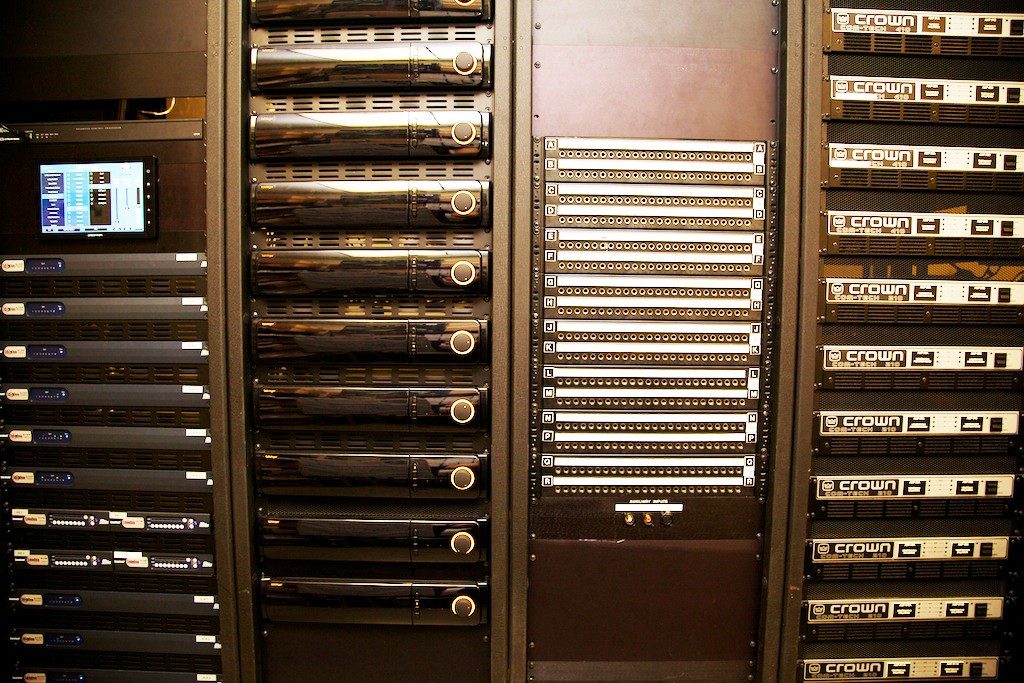
Here's the part nobody talks about: you can't shut down a resort hotel to install an audio system. Portofino runs 365 days a year. Guests are sleeping, eating, swimming, and having weddings while you're pulling cable and mounting speakers.
We phased the installation zone by zone, working in areas during low-occupancy windows and coordinating with the hotel operations team daily. Some work happened overnight. Some happened during the mid-week lulls when occupancy dipped. All of it happened with the understanding that a guest's experience couldn't be disrupted — period.
That meant planning cable runs that avoided active guest areas, staging equipment in loading docks instead of hallways, and testing zones at volumes that wouldn't bleed into occupied rooms. It meant having a plan B for every day, because a hotel's schedule changes constantly and you have to roll with it.
The whole project took several months from first site walk to final tuning. Not because it was slow — because it was careful. A resort audio system you rush is a resort audio system you redo.
Tuning: Where the System Comes Alive
Installation is half the job. Tuning is where the system actually becomes what it's supposed to be.
Every zone got individual DSP tuning — equalization, delay alignment, level matching, and crossover optimization. We tuned during actual operating conditions, not in an empty room at 2 AM, because an empty restaurant sounds nothing like one with 80 guests and a full kitchen running. We came back during peak hours, listened, adjusted, listened again.
"Great audio in a resort isn't about volume or equipment. It's about the guest never once thinking about the speakers."
The piazza zones got particular attention. With reflective stone surfaces, open water, and irregular architecture, getting even coverage without echoes and hotspots required multiple rounds of adjustment. We used measurement microphones to verify what our ears were telling us, but ultimately, the final call was always about how it felt standing in the space as a guest would.
The Result
Walk through Portofino Bay today and the audio just... works. The harbor piazza has this warm, ambient Italian feel that makes you forget you're in Orlando. The pool deck has energy without aggression. The restaurants feel intimate even when they're full. You move from space to space and the transitions are invisible — the vibe shifts naturally, the way it should.
The operations team can manage everything without calling us for every adjustment. They have the tools to set time-of-day schedules, switch sources for events, and fine-tune zones for seasonal changes. When they do need support, our 24/7 helpdesk is a call away — but the system is designed to need it as rarely as possible.
That's the real measure of a successful audio installation. Not the spec sheet. Not the equipment list. Whether the guests feel something better without knowing why, and whether the staff can run it without a degree in audio engineering.
What This Means for Your Property
If you're running a resort, hotel, or large hospitality property with audio that doesn't feel cohesive — zones that fight each other, equipment that's aging out, controls that only one person understands — this is the kind of transformation that's possible. It doesn't have to be 33 zones. The principles are the same whether it's 5 zones or 50.
The key is designing it as a system from the start. Not adding speakers one at a time, not patching zone after zone with different equipment from different eras. One cohesive design, properly specified, professionally installed, and meticulously tuned.
If your property's audio needs a rethink, we should talk. We'll walk your space the same way we walked Portofino — listening first, designing second, and building something that makes the whole property feel like it was always supposed to sound this way.