Every few months I get a version of the same call. A pastor or a facilities director has just walked through a "worship experience" showcase, seen a rig of moving heads wash the stage in magenta and teal, and asked their team, half-excited and half-terrified: "Can we do that? But, you know, not like that?"
I get the hesitation. Nobody wants their sanctuary to feel like a concert venue on a Tuesday and a nightclub on a Sunday. But the instinct to avoid automated lighting altogether because it feels flashy is, honestly, leaving a lot on the table. The truth is that moving light and color-changing fixtures aren't inherently loud. Loudness is a programming choice. A well-designed worship lighting system can do the opposite of what people fear — it can disappear into the service and just make the room feel right.
The Old Binary: Fluorescent or Spotlight
Most sanctuaries we walk into are stuck in one of two modes. Either everything is lit flat and even, house-light bright, all the time — fine for reading a bulletin, terrible for anything that wants to feel like a moment. Or there's a single follow spot and maybe some par cans from a renovation a decade ago, aimed at the platform and nowhere else.
Neither of those is really a design. They're defaults. And the gap between "everything is beige" and "we just installed forty moving heads" is enormous — most churches don't realize how much room there is in the middle.
What Automated Lighting Actually Buys You
The real value of automated fixtures in a worship space isn't the ability to swing beams around during the bridge of a song, although you can if that's your context. It's the ability to shift the emotional temperature of a room in seconds, without anyone touching a physical light.
- A slow shift from warm white to a deep amber for a prayer moment, no one visibly operating anything
- Full stage wash in a cooler blue-white for scripture reading, keeping faces natural and readable
- A gentle color pulse behind a baptism or communion moment that never competes with the moment itself
- Automatic recall of pre-programmed looks for Christmas Eve, Easter, or a baptism Sunday — set once, run reliably every time by a volunteer
That last point matters more than people expect. Most worship AV teams are volunteers. The value of automation isn't spectacle — it's consistency. A well-programmed system means the same team that runs sound on a Tuesday can recall "Advent Look 2" on a Sunday without a lighting designer standing over their shoulder.
Subtlety by Design: Color Temperature Over Chaos
This is where a lot of churches go wrong when they DIY it. They buy inexpensive moving heads, load in the factory color macros, and suddenly every song has a rainbow chase running behind it. It reads as amateur, not sacred — and it fights the sound and message instead of supporting it.
The fix isn't fewer fixtures. It's tighter programming. We build cue palettes around a small number of intentional colors — usually warm ambers, soft golds, a cool worship blue, maybe one deep accent color reserved for a handful of high moments a year. Movement, when it's used at all, tends to be slow position shifts rather than fast chases. The goal is a room that feels alive without anyone in the congregation consciously noticing the lighting changed.
The best worship lighting cue is the one nobody in the pews can describe afterward — they just remember how the room felt.
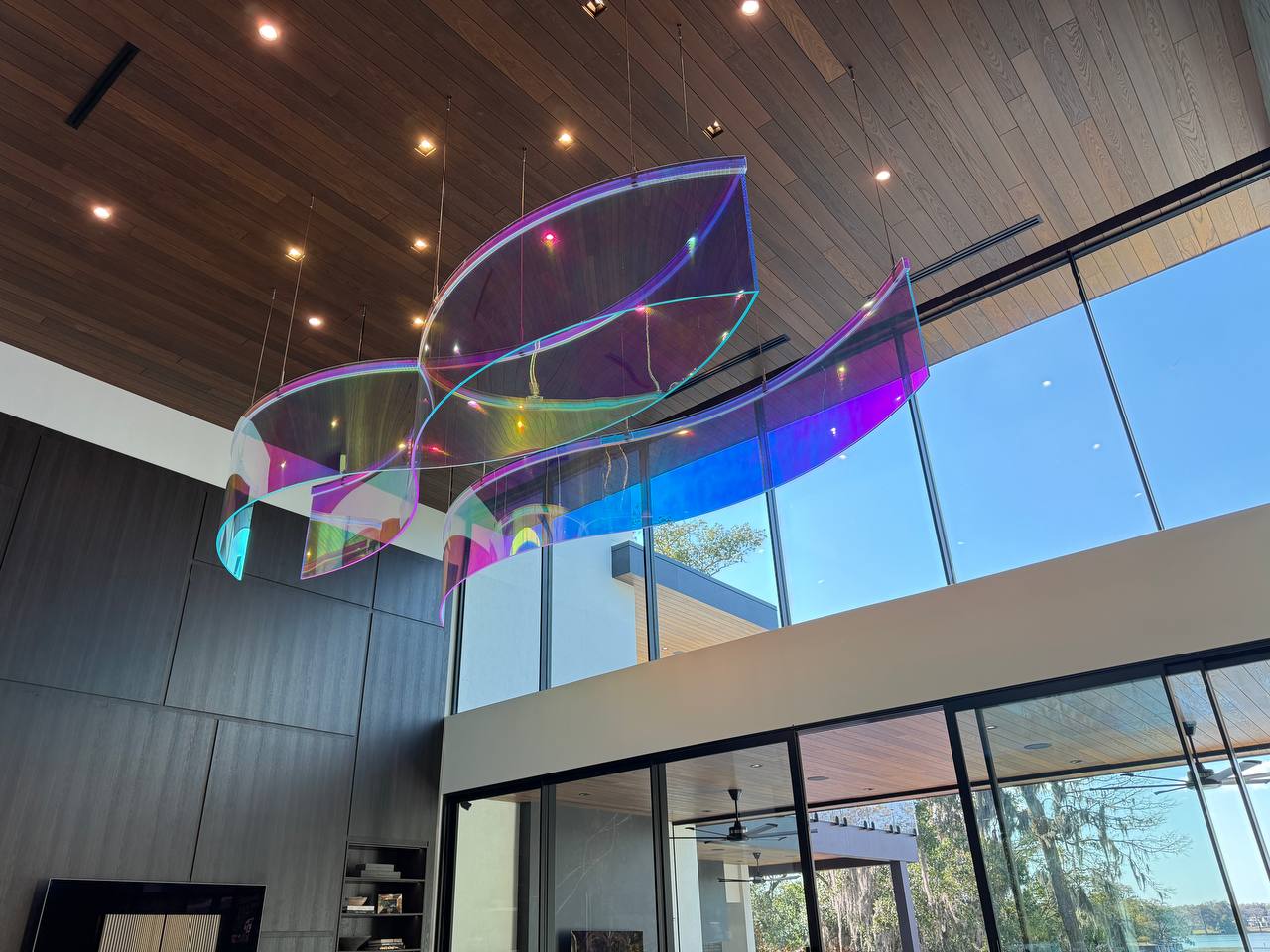
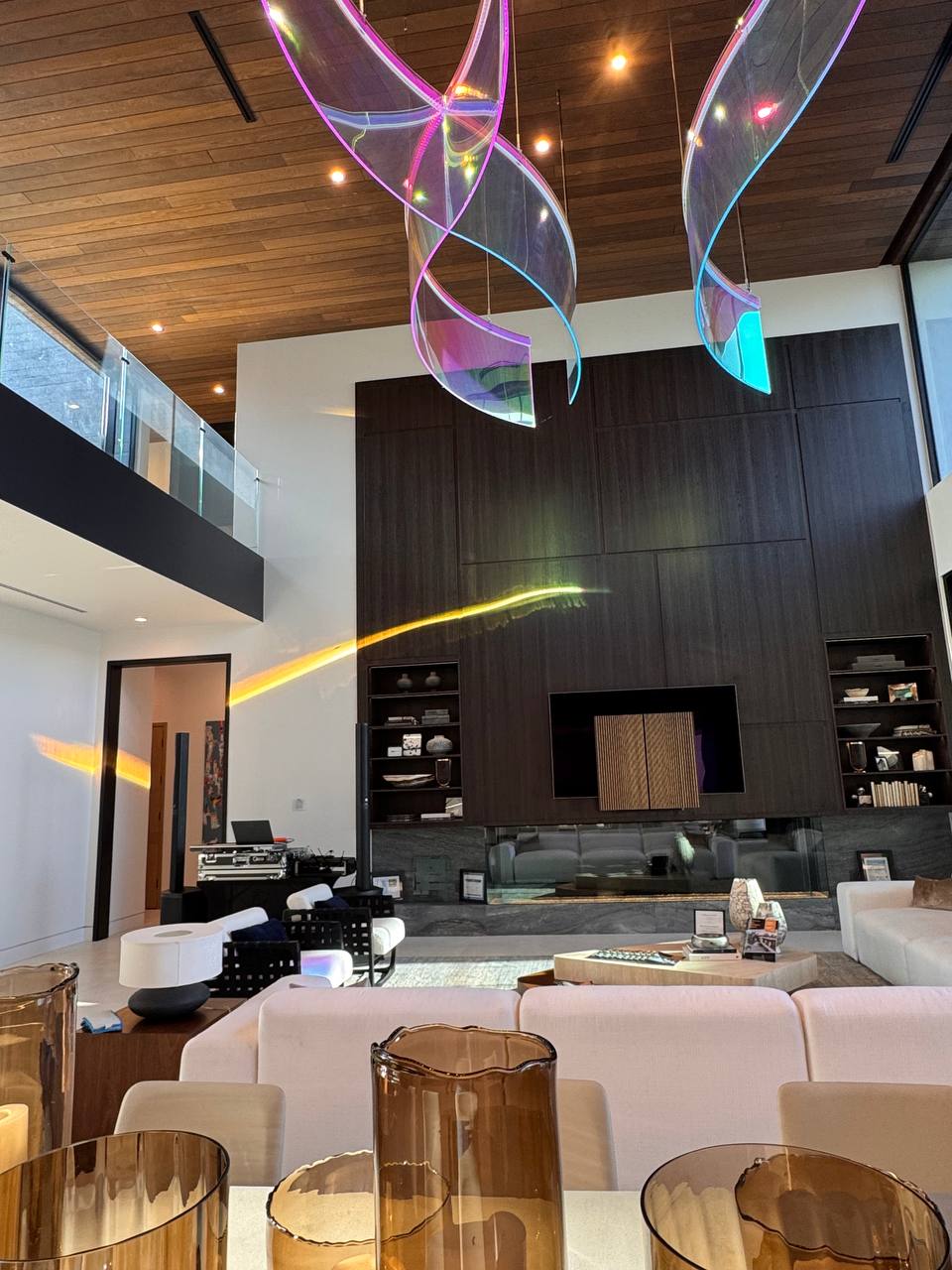
We think about this the same way we think about our light-based art installations — color and movement are tools for mood, not decoration for its own sake. A dichroic sculpture in someone's home works because the color shifts are slow, purposeful, and tied to the light source rather than thrown at random. Sanctuary lighting benefits from that same discipline.
Budget Tiers: What's Realistic
Every congregation asks the budget question early, and rightly so — this is stewardship money, not a corporate marketing spend. Broadly, we see three tiers:
- Entry tier: A handful of automated color-changing wash fixtures (4-8 units) replacing or supplementing existing stage lighting, run from a simple lighting console or a DMX-over-network controller integrated with existing AV. Enough to add color and mood without full moving-head choreography.
- Mid tier: A dozen-plus fixtures mixing wash and spot units, some pan/tilt movement, programmed scenes recalled from a touch panel alongside sound and video — built so a volunteer press one button for "Sunday Morning" and another for "Christmas Eve."
- Full tier: Larger sanctuaries or multi-campus churches running a dedicated lighting console, moving lights with gobos and effects, and tight integration with broadcast cameras (more on that in a related post below) — designed by a team that thinks about lighting as its own discipline, not an afterthought bolted onto sound.
None of these tiers requires "rock concert" to get real value. Even the entry tier, programmed with intention, changes how a room feels far more than most churches expect.
Pairing Lighting with Your Existing AV
The systems that work best are the ones where lighting isn't its own silo. If your sanctuary already has a control processor running sound, video switching, or streaming, automated lighting should live on that same network and ideally be recallable from the same touch panel your volunteer team already uses every week. That's the difference between "the lighting guy has to be here" and "anyone on rotation can run the service." We'll get into how that kind of unified control panel works in a separate post, because it's honestly one of the biggest quality-of-life upgrades we build into worship spaces.
If you're planning a broader AV upgrade — new speakers, a video system, a streaming setup — automated lighting is worth designing in from the start rather than adding later. Conduit, network drops, and power all get easier and cheaper when they're part of one integration plan instead of three separate ones.
If your team is weighing whether automated lighting makes sense for your space, we'd rather talk it through than sell you a rig you don't need. Reach out through our contact page, or take a look at how we approach full-building AV integration for houses of worship and beyond.