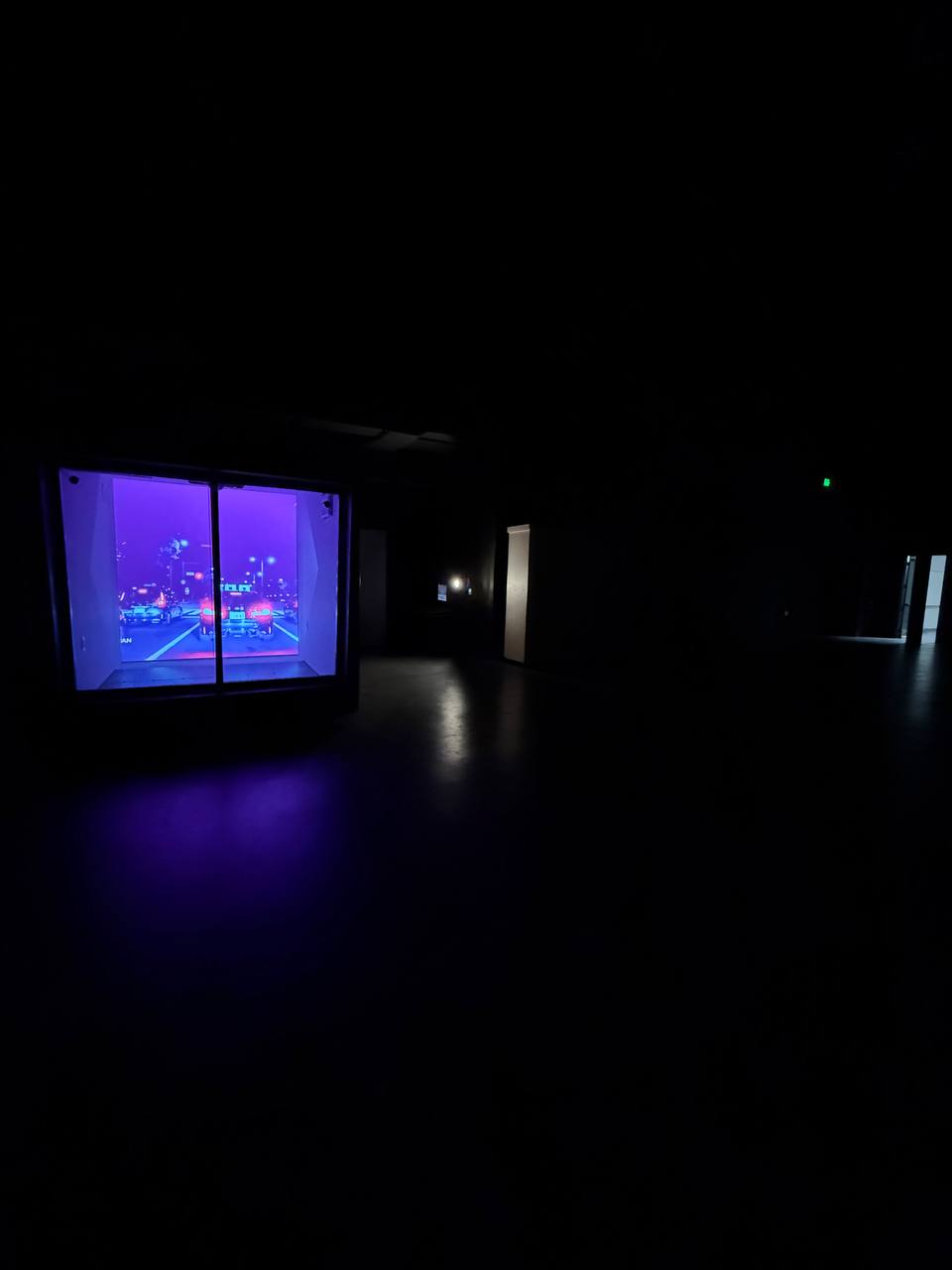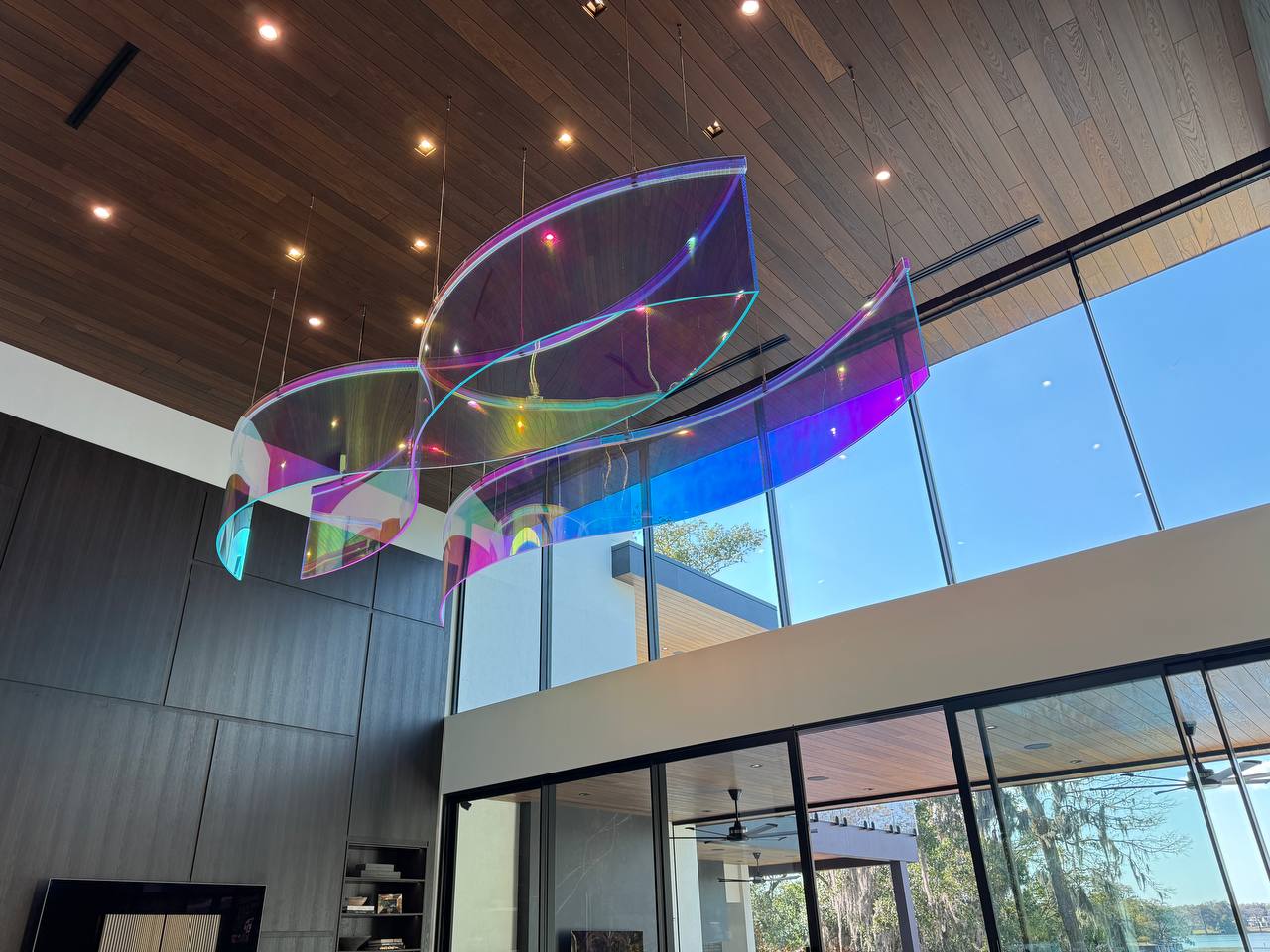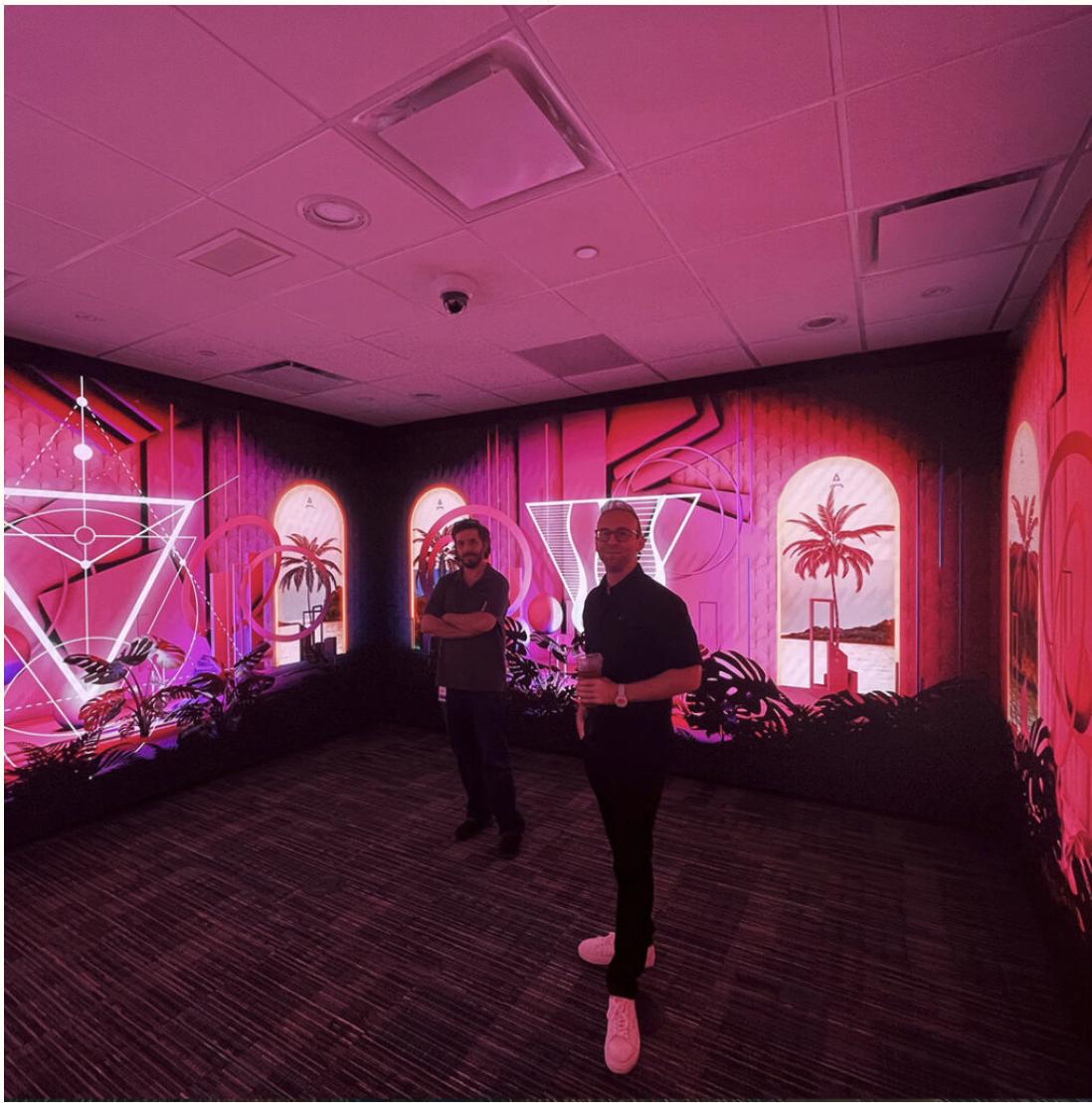
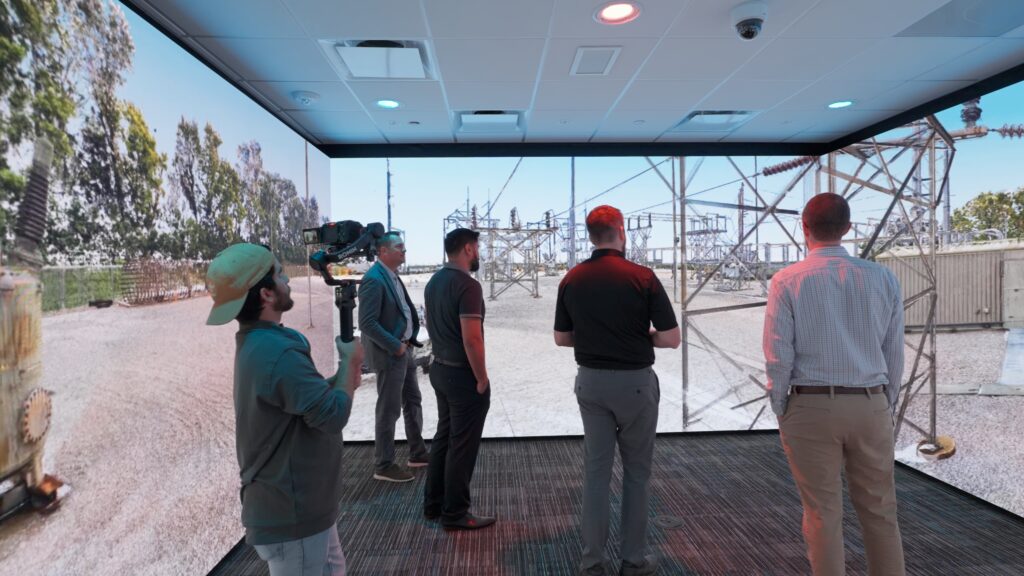
There's a room in the Burns & McDonnell headquarters where the walls don't exist. Not literally — there's steel, drywall, and structure behind everything. But when you step inside and the content starts running, all of that vanishes. You're standing in the middle of a project site. Or floating through a pipeline network. Or watching a thunderstorm sweep across a prairie from every direction at once.
This is what a 360° LED immersive room feels like. And building one is exactly as complicated and rewarding as it sounds.
The Brief: Make Us Feel It
Burns & McDonnell is a massive engineering, architecture, and construction firm. They work on infrastructure projects that most people never see but everyone depends on — power plants, transmission lines, water systems, military installations. The kind of work that's hard to communicate in a PowerPoint deck.
Their team came to us with a simple but ambitious goal: build a room where clients and stakeholders could step inside their projects. Not just see renderings on a monitor. Not just flip through slides. Actually be inside the work, surrounded by it, feeling the scale and complexity in a way that flat screens can't deliver.
They wanted immersion. Real, spatial, visceral immersion. The kind that changes how you understand a project because you're standing in the middle of it instead of looking at it from the outside.
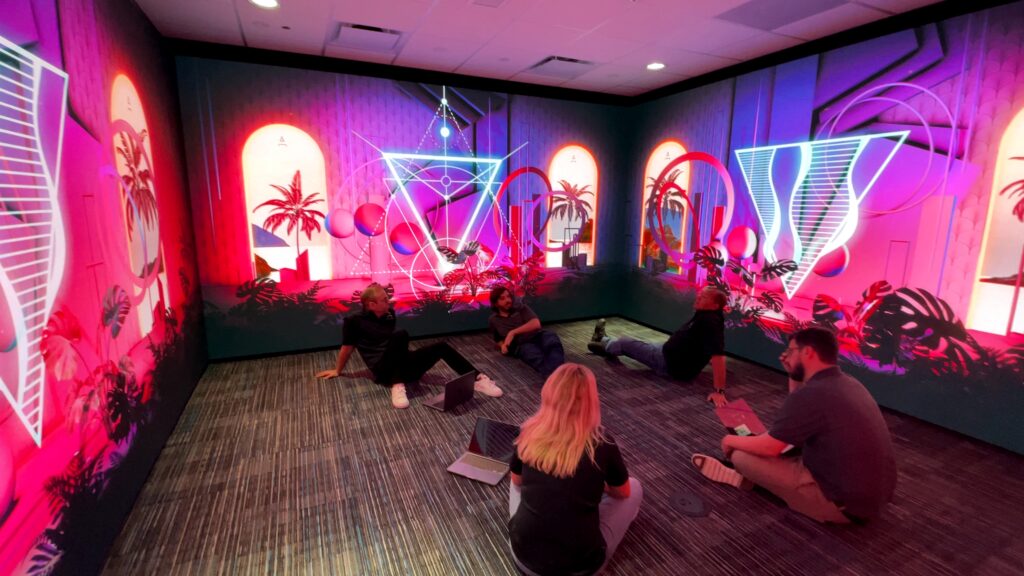
Designing for Total Immersion
An immersive LED room isn't just a big TV. It's a fundamentally different design challenge. When content wraps around you — walls, ceiling, maybe even the floor — the rules change. Every seam matters. Every brightness inconsistency is visible. The pixel pitch has to be tight enough that you can't resolve individual LEDs from arm's length. And the content itself has to be created specifically for the space, because a standard 16:9 video stretched across four walls looks exactly as bad as you'd imagine.
We started where we always start: with the room itself. Dimensions, structural capacity, HVAC requirements (LED walls generate serious heat), power distribution, and how people would actually move through the space. An immersive room that's uncomfortable to stand in for more than ten minutes is a very expensive failure.
The design called for direct-view LED on three full walls and the ceiling, with a treated floor surface that could accept projected content for full 360° experiences or remain neutral for standard presentations. The pixel pitch had to be fine enough for close viewing — people would be standing just a few feet from the walls — while staying within a budget that made sense for a corporate environment, not a theme park.
The Build: Precision at Every Step
Installing an immersive LED environment is a process that rewards patience and punishes shortcuts. Every panel has to be calibrated to match its neighbors. The structural mounting has to be dead-level and perfectly aligned, because at this scale, even a quarter-inch deviation creates a visible seam that breaks the illusion.
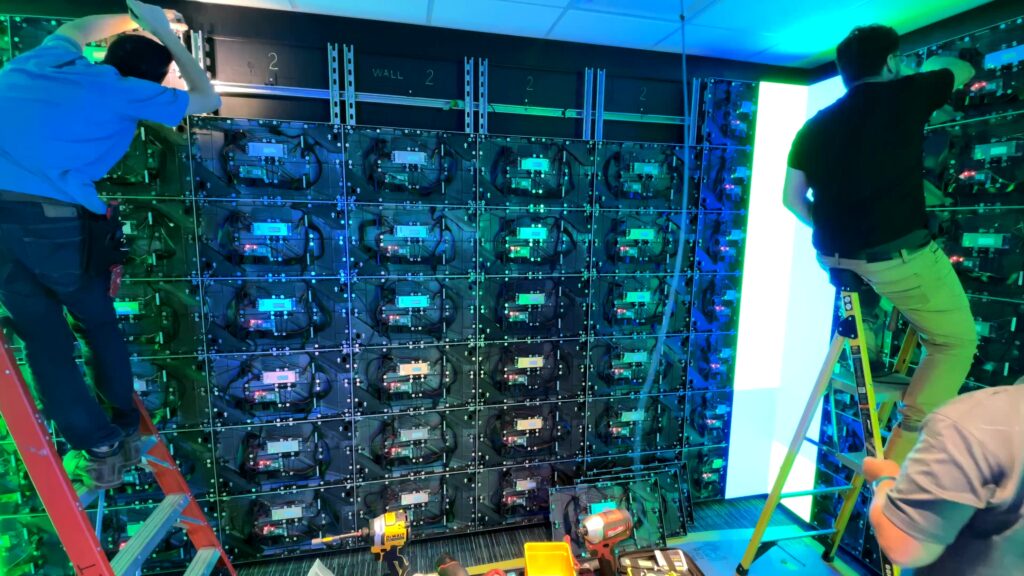
We built custom mounting structures to handle the weight and maintain alignment across the full surface area. Each wall section was installed, powered, and tested individually before we brought the system online as a unified canvas. The processing backbone had to handle a massive resolution across all surfaces simultaneously — we're talking about pushing content to what amounts to a single display surface larger than most movie screens, but wrapping around you instead of sitting in front of you.
The audio system was designed to match the visual immersion. Spatial audio processing means that sound follows the content — if a helicopter flies across the left wall and off to the right, the audio tracks with it. It's the kind of detail that most people don't consciously notice, but everyone feels. When the audio doesn't match the visuals, something feels off even if you can't articulate why. When it does match, the illusion is complete.
What It's Used For
This is the part that gets me excited. The room isn't just a showpiece — it's a working tool. Burns & McDonnell uses it for:
- Client presentations. Instead of explaining a project with CAD drawings and fly-throughs on a laptop, they walk clients into the space and surround them with the project at scale. The conversation changes completely when someone can look around and point at what they're discussing.
- Project review. Engineering teams use the room to review designs in immersive detail, catching issues that are easy to miss on a standard monitor. When you can see a pipeline junction at actual scale, wrapping around your peripheral vision, problems become obvious.
- Recruitment and culture. They bring prospective hires into the room to show them the kind of work they'd be part of. There's nothing like standing inside a visualization of a billion-dollar infrastructure project to communicate scale and ambition.
- Events and hosting. The room transforms for corporate events, creating environments that range from branded experiences to nature-inspired calm spaces. Same hardware, completely different feeling, just by changing the content.
What I Learned Building This Room
Every project teaches you something. This one taught me a few things:
Immersion is about elimination, not addition. The goal isn't to put screens everywhere. The goal is to remove every visual cue that reminds you you're in a room. That means no visible seams, no brightness hotspots, no bezels, no gaps. You're not adding technology — you're subtracting the room.
Content is half the project. The most beautiful LED cave in the world is boring if the content running on it was designed for a flat screen. Immersive content has to be created for the specific geometry of the space. It needs to wrap correctly, maintain perspective, and account for the fact that the viewer is inside the image, not in front of it. We work closely with content teams to make sure the room lives up to its potential.
"When people step in for the first time and forget where the walls are — that's the moment. That's what we build for."
Thermal management is not optional. Thousands of LEDs in an enclosed room generate significant heat. If HVAC isn't designed for the thermal load from day one, you end up with a room that's uncomfortable within minutes, which defeats the entire purpose of immersion. We spec HVAC requirements early and work with mechanical engineers to make sure the room stays comfortable for extended use.
Could This Work for Your Space?
The honest answer: maybe. An immersive LED room is a significant investment — we're talking six figures, sometimes well into seven, depending on size and spec. It's not for every corporate conference room.
But for the right application — a flagship office that hosts clients regularly, a sales center that needs to tell a visual story, a museum or visitor center, a branded experience space — the impact is transformational. It's the difference between telling someone about your work and putting them inside it.
We've built immersive environments at various scales, from full-room LED caves like this one to smaller LED and projection hybrid setups that deliver a similar feeling at a different price point. The right solution depends on your space, your audience, and what you're trying to make people feel.
If you've been thinking about bringing immersive technology into your space, let's have a conversation. I'll tell you what's realistic, what it costs, and whether it makes sense for what you're trying to do.