Static lighting has a ceiling, and it's a low one. Point a fixed fixture at a wall, set its color, and that's what you get — forever, until someone climbs a ladder and physically changes it. For a lot of spaces, that's completely fine. A conference room doesn't need its lighting to move. But the moment you're building a themed venue, an immersive experience, an event space, or anything meant to feel alive rather than decorated, static lighting starts working against you instead of for you.
This is where moving lights — automated fixtures that can change position, color, beam shape, and intensity on command — earn their place in a design, and it's worth understanding the basics before you spec a room.
What a Moving Light Actually Is
"Moving light" is industry shorthand for a category of automated fixtures, most commonly called moving heads. Unlike a fixed spotlight or wash light bolted in place, a moving head has motorized components that let it pan and tilt across a huge range — often 540 degrees of pan and 270 of tilt — while also changing color (through internal color mixing or a color wheel), zoom, focus, and sometimes projecting shaped patterns called gobos. A single moving head fixture can do the job of what used to take five or six static fixtures, and it can change everything about its output in real time, on cue.
The practical result: one lighting rig can go from a warm, still ambient wash to a sweeping, high-energy chase sequence to a tight spotlight following a specific spot in the room — without anyone touching a fixture.
Why Static Lighting Falls Flat in Experiential Spaces
The whole premise of an immersive or themed environment is that it responds to something — a story beat, a piece of music, a guest's movement through the space, a time of day. Static lighting can't respond to anything; it's fixed the moment it's installed. That mismatch shows up fast in themed venues: a "living" environment that never actually changes starts to feel like wallpaper within a few minutes, no matter how good the initial design looked in a rendering.
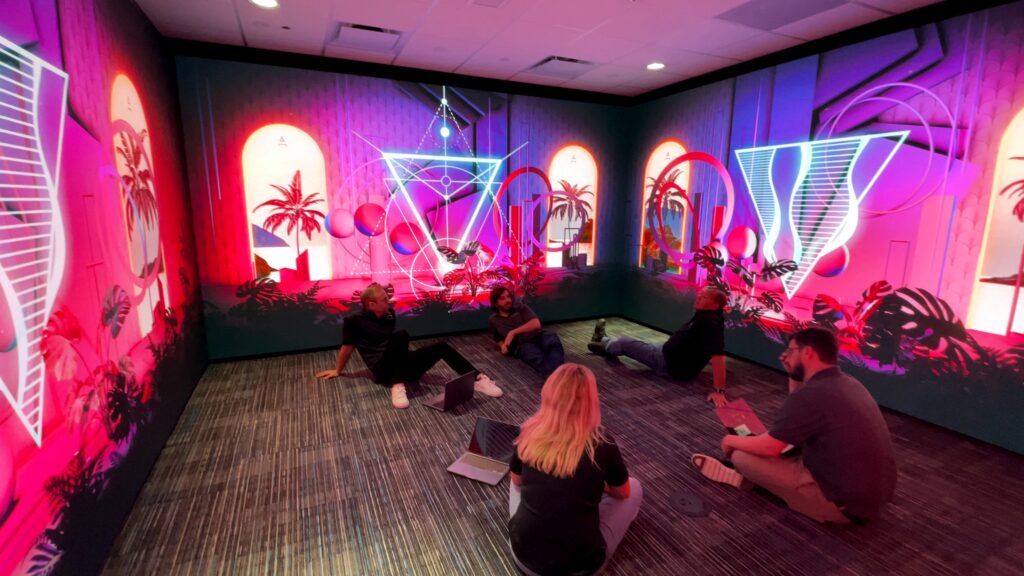
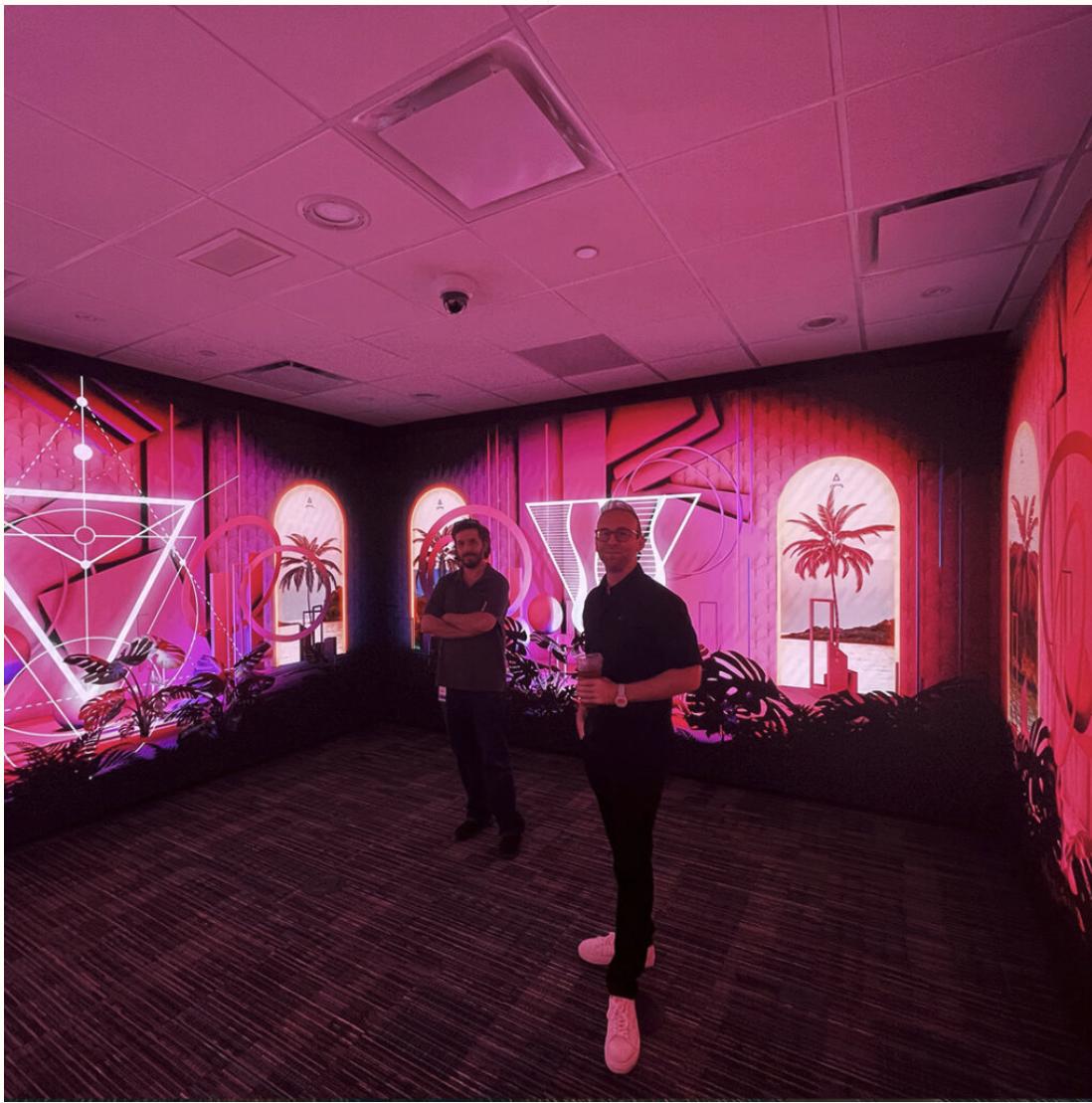
We saw this directly in our work on a fully immersive 360-degree room, where the lighting design had to shift in sync with the video content wrapping the walls — a static rig simply couldn't keep pace with content that was, by design, constantly in motion. You can see more on that project in our post on the Burns & McDonnell immersive room.
DMX: The Language Automated Lighting Speaks
None of this works without a control protocol, and in entertainment lighting that protocol is almost universally DMX512 (usually just called DMX). It's a digital signal standard that lets a single control console command up to 512 individual "channels" of data down one cable run — pan, tilt, color, intensity, and every other parameter on a moving head each get their own channel. A lighting console (or a software-based control system) sends out that data continuously, and every fixture on the line listens for its assigned channels and responds instantly.
For a venue owner, the important thing to know isn't the technical spec — it's that DMX is what lets a themed room be programmed with actual shows: cues, timed sequences, or live triggers, rather than a lighting designer manually flipping switches during an event.
A moving light rig without proper DMX control planning is just an expensive collection of fixtures that all do the same thing at once.
Integrating Lighting With the Rest of the AV System
This is where a lot of themed spaces run into trouble: lighting gets designed and installed as its own silo, separate from the audio and video systems, and then everyone's surprised when cues don't line up or a single show controller can't run the whole room. The better approach — and the one we push for on every themed and experiential project — is planning DMX lighting control alongside the audio and video systems from day one, usually tied into a central show control platform so a single cue can trigger lighting, audio, and video content together. That's the difference between a room that has lighting and a room that has a lighting design.
- Moving heads replace what used to take multiple static fixtures per position.
- DMX512 is the control language that lets fixtures be programmed into real shows.
- Lighting should be planned alongside audio/video, not bolted on afterward.
- A single show controller keeping lighting, audio, and video in sync is the goal for immersive spaces.
This kind of integrated thinking is what carried over from our resort and themed entertainment work — we talk through that broader approach in our post on AV design for themed entertainment.
Where This Fits for You
If you're designing a themed attraction, an event space that needs to transform between uses, or any immersive room where the environment itself is part of the experience, static lighting is going to hit a ceiling fast. Automated lighting with proper DMX control planning gives the room a vocabulary it can actually use — color, movement, and intensity that change with the story you're telling, not a fixed backdrop that stops working the second the novelty wears off.
We design and integrate automated lighting and control systems for themed venues, immersive rooms, and experiential spaces across Central Florida, working lighting in as part of the full AV system rather than an afterthought. Reach out and let's talk through what your space actually needs to come alive.