
Museum & Exhibit
AV Partner
We work behind the scenes for museum art and curatorial teams, technology, programming, system design, and ongoing upkeep for multimedia and lighting exhibits, so the work in front of it never has to think about the equipment behind it.
Talk to Our TeamA Technology Partner, Not Just an Installer
Most AV vendors show up once, install the equipment, and disappear. Museums do not work that way. Exhibits rotate. Curators change what a room needs to say every few months. Lighting rigs need reprogramming for a new installation. Projectors drift out of calibration after months of daily use. A one-time install cannot keep up with that pace, and it is not what a modern museum actually needs.
We built our approach around being a standing partner instead: the team an art department calls when a new exhibit needs its first system built from scratch, when a lighting cue needs to change for a rotating collection, or when something in a public, always-on space needs a repair call at an inconvenient hour.
That means we sit alongside curatorial and art teams from the earliest planning conversations, not just at install day, translating a curator's vision for a space into projection systems, lighting design, interactive technology, and control interfaces simple enough for museum staff to run day to day.
Art Teams, Not Just Facilities
This service is built for the people who curate and program a space, not just the facilities team that maintains the building. We work directly with museum art teams, curators, and exhibit designers to make sure the technology serves the work being shown, not the other way around.
Our team in Orlando has done exactly this kind of work for the Orlando Museum of Art and Kennedy Space Center's visitor exhibits, and for the Tampa Museum of Art, where we are now on our third project together, a new audio and video upgrade for their galleries.
ArtCube: Our Own Proving Ground
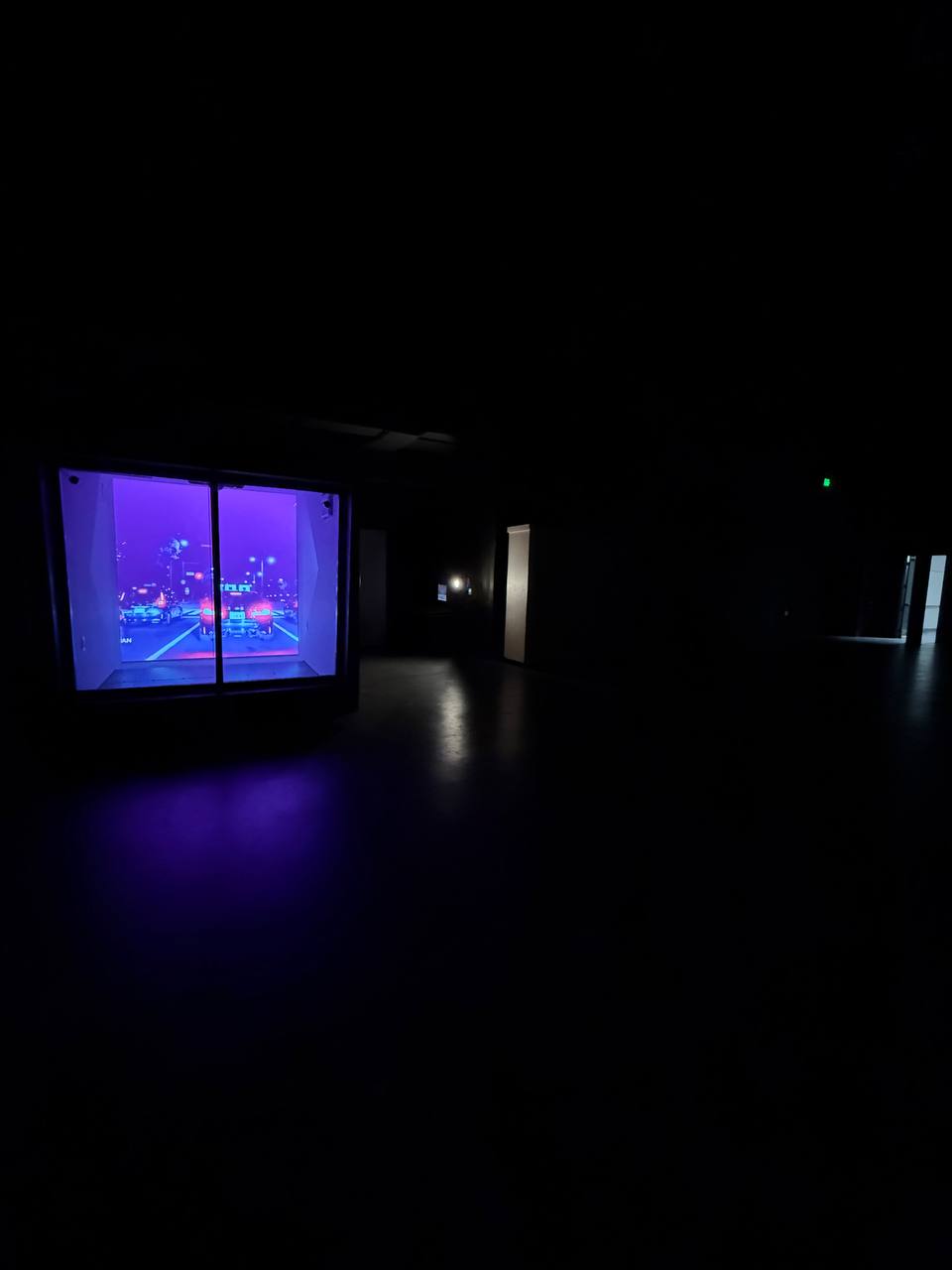
We built ArtCube, an immersive projection-mapped gallery inside a converted shipping container for UCF's Creative Village, entirely on this model. Glass windows on the front, container doors that open to reveal LED and projection walls inside, run through Resolume media server software so the space can host a completely different artist every month.
That project is where we learned the exact skill set a museum needs: content systems flexible enough for monthly rotation, projection calibration that holds over time, and control simple enough for art teams, not AV engineers, to run.